The MOQ (Minimum Order Quantity) for custom silicone products is not fixed. For products using an existing mold with simple customization, such as logo printing or color changes, some manufacturers may accept orders of around 100–200 pieces. For fully customized silicone products that require a new mold, a practical planning range is often 500–3,000 pieces, depending on the product design, manufacturing process, and factory requirements.
For wholesalers, importers, distributors, and private-label brands, understanding MOQ before starting a custom project can help control inventory costs, avoid unnecessary tooling expenses, and choose the right manufacturing solution.
This guide explains typical silicone product MOQs, what affects order quantities, and how to negotiate a more flexible starting order with your manufacturer.
MOQ stands for Minimum Order Quantity. It is the smallest quantity a manufacturer is willing to produce or sell in one order.
In silicone manufacturing, MOQ is mainly determined by:
Product design and size
Whether an existing mold can be used
Whether a new mold needs to be developed
Silicone material and color requirements
Production setup and efficiency
Logo printing and packaging requirements
For example, ordering an existing silicone baby bowl with your company logo is usually easier than developing a completely new silicone baby bowl with a unique shape, structure, and packaging.
The second project requires more development work and may involve additional mold investment.
Important: MOQ and mold cost are two different things. A manufacturer may accept a relatively small production order while still charging a separate tooling fee for a new mold.
There is no universal MOQ for silicone products. Different manufacturers have different production equipment, tooling arrangements, and order requirements.
Based on publicly published manufacturer guidance, the following figures provide useful planning references.
| Customization Type | Indicative MOQ | Typical Requirements |
|---|---|---|
| Existing product with custom logo | 100–200 pcs | Existing mold, simple branding |
| Existing design with color customization | 100–500 pcs | Standard product structure |
| New custom silicone shape | 500–1,000 pcs | New product mold and sampling |
| More complex custom molded products | 1,000–3,000 pcs | Special structures, materials, or finishes |
| Precision silicone industrial parts | 250–1,000+ pcs | Depends on molding process and product design |
These are examples from published supplier guidance, not guaranteed industry standards. Some manufacturers may accept smaller orders, while others require higher quantities.
For instance, some manufacturers identify approximately 250 pieces as an economical starting quantity for compression-molded technical parts, while injection-molded parts may require 1,000 pieces or more.
The best approach is to request a project-specific quotation rather than relying on a general MOQ estimate.
If you receive different MOQ quotations from different factories, there is usually a reason.
Here are five important factors to understand.
This is one of the biggest factors affecting MOQ.
If a manufacturer already has a suitable mold, you may only need to customize the product's color, logo, or packaging.
However, when you need a completely unique shape or structure, the factory may need to design and manufacture a new mold.
This involves additional development and setup costs.
Buyer's tip: If you are launching a new brand or testing a new market, consider starting with an existing product design and customizing the branding first. You can develop an exclusive mold after confirming market demand.
The size and structure of a silicone product also affect the production quantity.
A simple silicone coaster is generally easier to manufacture than a large silicone baby feeding set with multiple components.
Products with complicated structures, special textures, integrated functions, or multiple parts may require more production preparation.
More complicated products may therefore have higher MOQ requirements.
Different silicone products require different material specifications.
For example, food-contact products may require materials suitable for their intended food-contact application. Industrial silicone parts may have different requirements for flexibility, hardness, or temperature resistance.
Color customization also matters.
If you request five different colors, the manufacturer may need to prepare separate material batches and change production settings.
This can increase setup costs and result in a higher minimum quantity per color.
Buyer's tip: Starting with one or two standard colors may help reduce your initial purchasing commitment.
Adding your company logo does not always require a new production mold.
Common customization options include:
Embossed or debossed logos
Screen printing
Custom color matching
Printed product labels
Custom retail boxes
Branded gift packaging
However, some custom finishes and packaging materials have their own minimum production requirements.
For example, a silicone product may have a relatively low production MOQ, but its customized retail packaging may require a larger order.
Always ask your supplier whether the product MOQ and packaging MOQ are calculated separately.
Different silicone manufacturing processes have different production requirements.
For example:
Compression molding: Commonly used for solid silicone products and suitable for a wide range of product sizes and production volumes.
LSR injection molding: Often selected for products requiring precise dimensions, complex designs, or high-volume manufacturing.
The appropriate process depends on the product's design, function, quantity, and target cost.
A good manufacturer should recommend a suitable process instead of simply asking you to increase your order quantity.
Many importers and small businesses want to develop their own silicone products but do not want to invest in thousands of units for the first order.
There are several practical ways to reduce the initial purchasing commitment.
This is usually one of the easiest ways to reduce initial investment.
Instead of developing a completely new product, choose an existing product structure and customize:
Product color
Company logo
Packaging
Minor design details
You can build a branded product without paying for a completely new mold.
Multiple colors can increase material preparation and production setup requirements.
For your first order, consider using one main color and expanding your color range after confirming sales performance.
Custom-designed retail boxes can increase both cost and minimum order requirements.
For an initial order, consider standard packaging with a customized label or sticker.
Once your sales volume grows, you can upgrade to fully customized packaging.
Some manufacturers are willing to discuss smaller trial orders for new products.
A pilot order allows you to:
Test product quality
Collect customer feedback
Evaluate market demand
Check packaging and branding
Reduce the risk of holding excess inventory
The unit price may be higher for a small production run, but it can help reduce the financial risk of launching an untested product.
If you need several silicone products, ask whether the manufacturer can combine quantities across different products.
For example, you may want to purchase silicone bowls, baby spoons, and silicone bibs.
Depending on the factory's production arrangements, some setup or purchasing requirements may be shared.
However, do not assume that different designs, colors, or product categories automatically qualify for one combined MOQ. Always confirm the conditions with the factory.
The lowest MOQ is not always the best purchasing decision.
A small order may have a higher unit price, while a large order may create unnecessary inventory and cash-flow pressure.
Consider the following situations:
| Buyer Type | Suggested Purchasing Strategy |
|---|---|
| New business or startup | Start with existing molds and a small trial order |
| Importer or distributor | Compare unit prices at different order quantities |
| Established wholesale buyer | Consider larger orders to improve unit economics |
| Private-label brand | Balance mold investment, customization, and expected sales |
| Product development company | Approve prototypes before committing to mass production |
Before placing an order, calculate the total purchasing cost.
Do not look only at the product's unit price. Also consider:
Mold development fees
Prototype and sample costs
Product manufacturing costs
Customized logo and packaging costs
Quality inspection and testing costs
International shipping and import expenses
A slightly higher unit price may be worthwhile if it allows you to begin with a manageable order quantity.
If you want an accurate quotation from a silicone manufacturer, prepare the following information:
| Required Information | Example |
|---|---|
| Product Type | Silicone Baby Bowl |
| Product Design | Existing design or custom design |
| Product Size | 12 cm diameter |
| Material | Food-grade silicone |
| Color | Pantone 7541C |
| Logo | Embossed company logo |
| Packaging | Custom retail box |
| Estimated Quantity | 500–1,000 pieces |
| Target Market | Europe / USA / Other markets |
You do not need to have every technical detail prepared.
You can start with product reference pictures, a physical sample, a sketch, or a 3D drawing. An experienced manufacturer can help evaluate the design and recommend a suitable production solution.
A useful quotation request should ask for three things:
MOQ for your requested customization
Tooling cost, if a new mold is required
Unit price at different order quantities
This makes it much easier to compare manufacturers fairly.
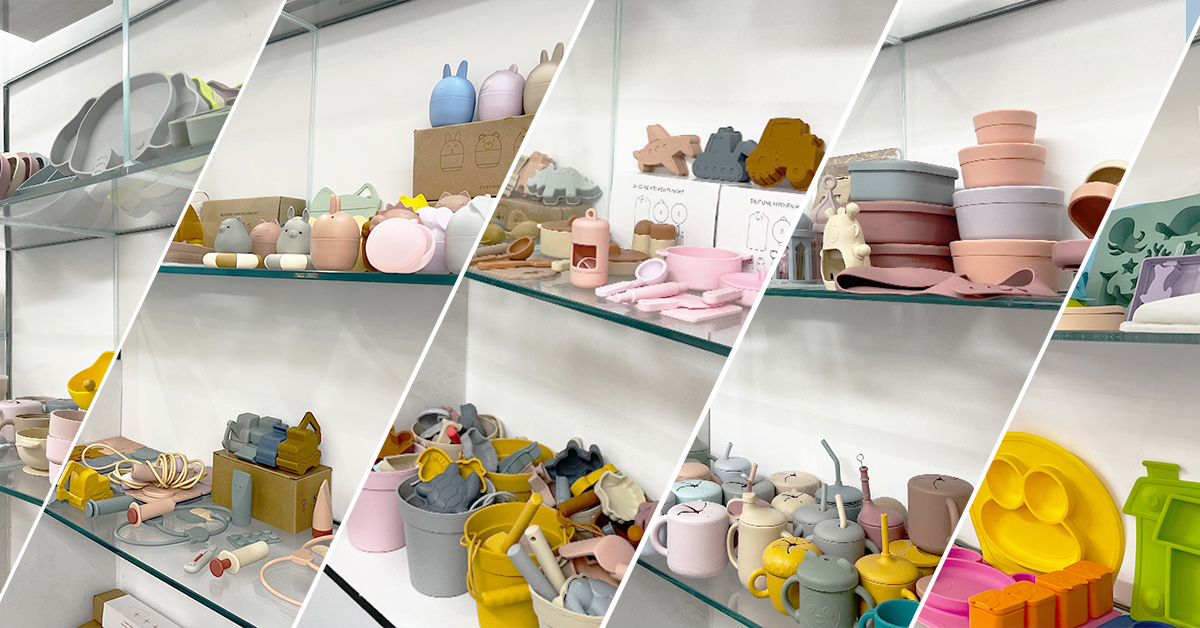
Kangde Silicone is a China-based silicone products manufacturer with more than 23 years of manufacturing experience, specializing in B2B wholesale, OEM, and ODM production.
We provide one-stop manufacturing support, covering product design, mold development, prototype sampling, mass production, logo customization, and packaging.
Our factory operates more than 25 automated compression molding lines and follows a 12-step quality control process.
Our main product categories include silicone kitchenware, baby products, pet supplies, daily-use products, and customized silicone products.
Whether you are an importer looking for a reliable wholesale supplier or a brand developing a new silicone product, our team can evaluate your design, estimated quantity, and customization requirements to recommend a practical production solution.
Our goal is to help buyers develop quality silicone products with a reasonable balance between MOQ, product cost, and manufacturing requirements.
For OEM and ODM inquiries, you can send your product pictures, drawings, or requirements to our team for a project-specific quotation.
Yes, it may be possible, especially when using an existing mold with simple customization such as logo printing or standard color changes.
However, a completely new product design requiring dedicated tooling may need a higher production quantity.
For fully customized silicone products, published manufacturer examples commonly range from 500 to 3,000 pieces.
The actual MOQ depends on the product's size, complexity, molding process, and production requirements.
Not necessarily in a direct way. Mold development mainly increases the initial investment.
However, manufacturers may set a higher production quantity to make tooling, setup, and manufacturing costs more economical.
Always ask for the mold fee and product MOQ separately.
Yes. Many existing silicone products can be customized without developing a completely new mold.
Common options include changing the color, adding a logo, and designing customized packaging.
This is often a practical choice for businesses that want to test a new product before investing in exclusive tooling.
It depends on the manufacturer's production arrangements.
Some factories calculate MOQ separately for each product design and color, while others may allow certain quantities to be combined.
Before ordering, confirm whether the quoted MOQ applies per SKU, per color, or to the total purchase order.
Yes. Most professional custom silicone manufacturers can arrange samples or prototypes before mass production.
Sample approval allows you to check the product's appearance, dimensions, color, material, and functionality before confirming the bulk order.
No. A lower MOQ can reduce inventory pressure, but it may also increase the unit price.
The best order quantity depends on your sales forecast, available budget, product cost, and expected market demand.
Send your supplier the product pictures or drawings, estimated order quantity, material requirements, preferred colors, logo details, and packaging requirements.
The manufacturer can then evaluate the project and provide a more accurate MOQ, tooling fee, unit price, and production schedule.
Final Conclusion