Choosing the right silicone products supplier is essential for building a profitable and reliable wholesale business. The best supplier is not necessarily the one offering the lowest price. Instead, look for a manufacturer that can provide consistent product quality, verified material safety, reasonable minimum order quantities (MOQs), stable production capacity, competitive pricing, and reliable delivery.
For wholesalers, importers, distributors, and private-label brands, it is also important to check whether the supplier supports OEM and ODM services, custom molds, product design, and packaging.
This guide explains seven important factors to consider before choosing a silicone products supplier, helping you reduce purchasing risks, control costs, and build a long-term manufacturing partnership.
One of the first decisions is whether to work directly with a silicone manufacturer or through a trading company.
Both can provide sourcing services, but working directly with a factory often gives wholesale buyers better visibility into production, customization, quality control, and manufacturing costs.
Before placing an order, ask the supplier:
Do you own your manufacturing facility?
Can I see your production lines and workshop?
Do you manufacture products in-house or outsource production?
Can you provide factory videos or arrange a factory audit?
Do you have experience producing similar silicone products?
A reliable manufacturer should be able to explain its production process clearly, from raw material selection and mold development to final inspection and packaging.
Why does this matter?
Direct communication with the factory can reduce misunderstandings, make custom development easier, and help buyers respond more quickly to changes in product specifications.
Material quality is one of the most important factors when sourcing silicone products, especially for kitchenware, baby products, and other items that may come into contact with food or skin.
Not all silicone products have the same material quality. Buyers should confirm the material grade and intended application before ordering.
Ask your supplier for:
Material specifications and technical information.
Relevant food-contact or product safety test reports.
Information about colorants and other materials used.
Product samples for physical inspection.
Batch consistency and quality inspection procedures.
For food-contact silicone products, check which requirements apply to your destination market.
For example:
FDA-related requirements: For products sold in the United States, check the applicable FDA food-contact requirements. 21 CFR 177.2600 covers certain rubber articles intended for repeated use in contact with food. It is important to confirm that the actual material and finished product meet the applicable requirements.
LFGB: A commonly requested German food-contact testing framework for relevant products.
EU food-contact requirements: Regulation (EC) No 1935/2004 establishes general safety principles for materials intended to come into contact with food.
One important point: Do not accept a general statement such as "FDA approved" as sufficient proof. Ask for the actual test report, check the product or material covered, and confirm whether it applies to your intended use.
A supplier should also be able to explain the difference between a food-grade material claim and a finished-product test result.
A supplier may offer an attractive quotation, but can it handle your order consistently?
Production capacity matters when you need regular wholesale orders, seasonal stock replenishment, or large-volume customized products.
Consider the following factors:
| Evaluation factor | What to check | Why it matters |
|---|---|---|
| Manufacturing experience | Years in silicone production | Helps assess practical industry experience |
| Production equipment | Compression molding, LSR or other suitable processes | Determines manufacturing capabilities |
| Production capacity | Number of machines and output capacity | Helps assess bulk-order capability |
| R&D capabilities | Design and engineering support | Important for custom products |
| Quality control | Inspection procedures and records | Reduces defects and inconsistent batches |
| Production lead time | Actual manufacturing schedule | Helps you plan inventory |
Do not judge a factory only by its advertised number of machines.
Ask how many units it can produce for your specific product, whether the production line is available, and how it handles urgent or repeat orders.
A supplier with suitable equipment and experienced production staff is generally a better choice than one that simply promises high output.
For wholesale buyers, price is important, but the cheapest quotation does not always mean the lowest overall cost.
When comparing silicone suppliers, consider the complete purchasing cost.
| Cost item | Questions to ask |
|---|---|
| Unit price | Does the quotation include the required specifications? |
| MOQ | What is the minimum order quantity for each product or color? |
| Mold cost | Is a new mold required for customization? |
| Sample cost | Are samples free or chargeable? |
| Packaging | Is custom packaging included? |
| Shipping | Is the quotation EXW, FOB, CIF, or another Incoterm? |
| Additional fees | Are there testing, printing, or setup costs? |
Here are four practical methods:
Order multiple products together: Combining products may help reduce shipping and coordination costs.
Use existing molds: If the design meets your requirements, an existing mold can help avoid new mold investment.
Plan larger production batches: Higher quantities may reduce unit production costs, depending on the product and manufacturing process.
Standardize product specifications: Using consistent materials, dimensions, colors, and packaging can make repeat orders more efficient.
Always request a detailed quotation rather than comparing unit prices alone.
If you are building your own brand or developing unique products, customization capabilities should be a major part of your supplier evaluation.
A professional silicone products manufacturer should ideally support different levels of customization.
| Customization service | Description | Suitable for |
|---|---|---|
| Logo customization | Add your brand logo through printing, embossing, or other suitable methods | Private-label wholesalers |
| Color customization | Produce products in your brand colors | Retail brands and distributors |
| Packaging customization | Custom boxes, labels, inserts, and packaging designs | Established brands |
| Mold customization | Develop molds based on your drawings or samples | Buyers with unique product designs |
| Product development | Support design improvements, prototypes, and sampling | OEM and ODM projects |
Before starting a custom project, confirm:
Who owns the mold after payment?
What is the mold development cost?
How many sample revisions are included?
How long does sample development take?
Can the factory keep your design confidential?
Can the supplier maintain the same specifications for repeat orders?
Practical tip: Approve a final pre-production sample before mass production. Keep the approved sample and written specifications as references for future orders.
This simple step can help prevent differences in color, size, hardness, appearance, and packaging between sample and bulk production.
A good silicone supplier should have a clear quality control system rather than relying only on final product inspection.
Quality checks should cover the entire manufacturing process.
A typical inspection process includes:
Raw material inspection.
Material preparation and mixing.
Mold and production setup checks.
First-piece inspection.
In-process production inspection.
Product appearance inspection.
Dimension and specification checks.
Final inspection before packaging.
For customized and wholesale orders, agree on the inspection requirements before production starts.
Depending on your product, you may need to check:
Product dimensions and weight.
Color consistency.
Surface defects and contamination.
Odor and appearance.
Logo and printing quality.
Packaging and labeling.
Applicable safety and performance requirements.
You can also request a pre-shipment inspection or appoint an independent inspection company for larger orders.
ISO 9001 is an internationally recognized quality management system standard. It provides a framework for managing and improving business processes and maintaining consistent quality.
However, ISO 9001 certification does not automatically mean every product is defect-free or meets food-contact requirements. Buyers should still request relevant product specifications, test reports, and inspection records.
A supplier relationship does not end when you place an order.
For wholesale businesses, communication and delivery reliability can directly affect inventory management, customer satisfaction, and repeat sales.
Evaluate your supplier based on these questions:
| Factor | What a reliable supplier should provide |
|---|---|
| Response time | Clear and timely replies |
| Order confirmation | Written specifications and quantities |
| Production updates | Regular progress information |
| Delivery schedule | A realistic and confirmed lead time |
| Problem handling | A clear process for defective products |
| Repeat orders | Consistent product specifications and quality |
Before confirming an order, clarify the payment terms, delivery terms, production schedule, packaging details, and procedures for handling quality disputes.
A reliable supplier should communicate problems early rather than waiting until the shipment is delayed.
For buyers who regularly purchase silicone products in bulk or require customization, a direct manufacturer is often worth considering.
| Comparison | Direct Manufacturer | Trading Company |
|---|---|---|
| Product pricing | Potentially more competitive for factory-made products | May include an additional service margin |
| Customization | Direct access to production and engineering teams | Depends on factory partners |
| Production control | More direct visibility | Depends on supplier coordination |
| Product range | Usually focused on its manufacturing capabilities | May offer products from multiple factories |
| Communication | Direct factory communication | Communication through an intermediary |
| Best for | Bulk orders, OEM, ODM, repeat production | Multi-category sourcing and smaller sourcing projects |
A trading company may still be a suitable choice if you need products from multiple industries or prefer a single sourcing contact.
The right choice depends on your order size, customization needs, product range, and purchasing strategy.
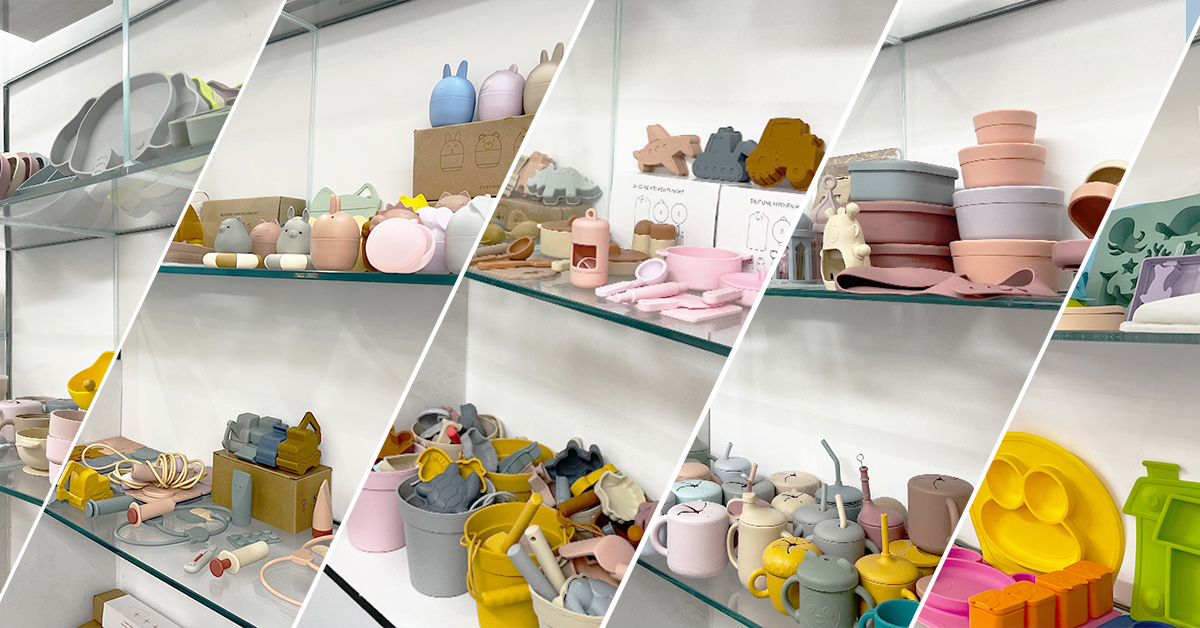
Kangde Silicone is a China-based silicone products manufacturer specializing in wholesale supply and OEM/ODM customization for international B2B customers.
With 23 years of silicone manufacturing experience, Kangde provides integrated services covering product design, mold development, prototyping, mass production, logo customization, and packaging.
Our manufacturing capabilities include:
More than 25 automated compression molding production lines.
A 300㎡ R&D center with experienced designers.
More than 200 new product developments annually.
ISO 9001 and ISO 14001 management system certifications.
Relevant food-contact and product compliance testing support, including FDA, LFGB, CE, RoHS, and REACH where applicable.
A 12-step quality control process.
Typical production lead times of 7–30 days, depending on product design, order quantity, and customization requirements.
Our product categories include silicone kitchenware, baby products, pet supplies, daily necessities, and custom silicone components.
Whether you are an importer, distributor, wholesaler, or private-label brand, we work with you to develop suitable silicone products and support long-term bulk purchasing.
Looking for a reliable silicone products manufacturer in China?
Contact Kangde Silicone to discuss your product requirements, request a quotation, or explore OEM and ODM customization options.
Website: https://www.kangdesilicone.com/
Email: sales@kangdesilicone.com
Look for a supplier with proven manufacturing experience, suitable production equipment, relevant product test reports, clear quality control procedures, transparent pricing, and reliable delivery. Request samples and verify the factory's capabilities before placing a bulk order.
For regular wholesale orders and customized products, buying directly from a manufacturer can provide better production visibility, direct technical communication, and more control over specifications. However, a trading company may be more convenient when sourcing products from multiple industries.
MOQ varies depending on the product design, size, color, production process, and whether a new mold is required. Standard products may have lower MOQs than fully customized products. Always ask for the MOQ of each product and color before confirming an order.
The required documentation depends on the product and destination market. Buyers sourcing food-contact silicone products should check applicable FDA requirements in the United States or relevant EU food-contact legislation. LFGB testing may also be requested by German and European buyers. ISO 9001 can provide additional information about a manufacturer's quality management system.
Yes. Many silicone manufacturers offer private-label services, including logo printing, embossed logos, custom colors, packaging, and product development. Confirm the available customization methods and costs before production.
Production time depends on product complexity, mold development, sample approval, order quantity, and factory capacity. Standard products may be completed faster, while new custom designs require additional time for mold making and testing. Ask for separate timelines for sampling and mass production.
Request samples, review material specifications, check relevant test reports, and inspect product dimensions, appearance, color, odor, and workmanship. For larger orders, agree on written inspection standards and consider a pre-shipment inspection.
OEM means manufacturing products according to the buyer's design, drawings, or specifications. ODM means the manufacturer provides product design and development support, which the buyer can select or customize for their brand.
Yes, if the manufacturer produces multiple product categories. Working with one supplier for kitchenware, baby products, pet supplies, and daily-use silicone products may simplify communication, quality management, and order coordination.
To receive an accurate quotation, provide the product design or reference image, dimensions, material requirements, color, estimated order quantity, logo requirements, packaging specifications, and destination country. If you need a custom product, also ask about mold costs and sample development.
Choosing the right silicone products supplier is not simply about finding the lowest quotation. It is about finding a manufacturing partner that can consistently meet your product specifications, quality requirements, delivery schedule, and long-term business needs.
Before placing your first wholesale order, compare at least two or three suppliers, request samples, verify relevant documentation, and confirm all important terms in writing.
A reliable supplier can help you reduce purchasing risks, maintain product consistency, and build a more competitive wholesale business.