Finding a reliable silicone products manufacturer in China requires more than comparing prices. Buyers should evaluate a supplier's actual production capabilities, product quality, material documentation, sample consistency, customization experience, and communication before placing a bulk order.
For wholesalers, importers, retailers, and private-label brands, the best supplier is not necessarily the cheapest one. It is the manufacturer that can consistently deliver the required quality, support OEM and ODM customization, meet your target costs, and provide reliable service throughout the order process.
China offers a broad silicone manufacturing supply chain, but suppliers differ significantly in their experience, equipment, quality standards, and ability to handle custom orders. This guide explains how to identify a suitable factory and avoid common sourcing problems.
China is one of the world's major manufacturing and export centers, with an extensive industrial supply chain covering raw materials, product design, mold making, production, packaging, and international shipping.
According to China's General Administration of Customs, China's total foreign trade reached RMB 45.47 trillion in 2025, with exports increasing by 6.1% year over year.
More specifically, World Bank WITS data shows that China exported approximately US$1.446 billion worth of silicones in primary forms in 2024, representing about 545.62 million kilograms.
These figures describe different parts of the supply chain: the first covers China's overall international trade, while the second specifically covers silicone materials rather than finished silicone consumer products.
For international buyers, China's manufacturing ecosystem offers several practical advantages:
Wide product selection: Silicone kitchenware, baby products, baking molds, household accessories, and industrial silicone products.
OEM and ODM services: Custom product design, molds, colors, sizes, logos, and packaging.
Flexible production options: Different suppliers can support different order quantities and product requirements.
Integrated supply chains: Access to material suppliers, mold manufacturers, packaging providers, and export services.
Competitive manufacturing costs: Opportunities to balance product quality, customization, and purchasing budgets.
However, these advantages depend on choosing the right manufacturer.
The first step is to determine whether you are communicating directly with a factory or with a trading company.
Both can be legitimate business partners, but their production capabilities and pricing structures may be different.
A genuine manufacturer should be able to explain its production process and demonstrate how it manages product quality.
Here are five practical ways to check:
1. Request factory photos and videos
Ask for recent videos showing the production workshop, silicone molding machines, raw material storage, inspection area, and packaging process.
2. Arrange a live video factory tour
A live video call is more useful than relying entirely on promotional photos. Ask the supplier to show specific production areas and equipment.
3. Check the business information
Request the company's registered business name, business license, factory address, and export experience.
Make sure the company information is consistent with the quotation and payment details.
4. Ask about production equipment
An experienced silicone manufacturer should understand its molding processes, mold development, production capacity, and quality inspection procedures.
5. Ask who controls product quality
Find out whether inspection is conducted by the factory's own quality team and whether defective products are recorded and handled.
Practical tip: Do not judge a manufacturer only by its website, Alibaba profile, or product catalog. Ask questions that require the supplier to demonstrate actual production knowledge.
Material quality directly affects product performance, durability, and customer satisfaction.
This is particularly important for silicone baby products, kitchenware, baking molds, and other products that come into contact with food.
When evaluating a silicone products manufacturer, ask the following questions:
What type of silicone material is used?
Is the material suitable for the intended application?
Can the supplier provide material specifications?
Are relevant food-contact or product-safety test reports available?
Can the manufacturer maintain consistent material quality across bulk orders?
| Document or test | What it helps you verify |
|---|---|
| Material specification | The material type and basic characteristics |
| FDA-related compliance documentation | Whether the product or material meets the applicable US food-contact requirements |
| LFGB test report | Relevant food-contact testing for the German and European market |
| REACH-related documentation | Compliance with applicable EU chemical requirements |
| Third-party laboratory report | Product performance and safety test results |
One important point: FDA and LFGB are not interchangeable certificates that automatically apply to every silicone product.
Requirements depend on the product, its intended use, the destination market, and applicable regulations. Always request relevant documentation for the actual material or finished product you intend to purchase.
Do not accept a general statement such as "100% food grade silicone" as sufficient proof of compliance.
Before contacting a supplier, decide whether you need existing products or customized products.
Different manufacturers offer different levels of customization.
| Service | What it means | Best for |
|---|---|---|
| Standard Wholesale | Purchase existing products from the manufacturer's catalog | Distributors and retailers |
| OEM | Manufacture products according to your design and specifications | Established brands and private-label businesses |
| ODM | Develop or adapt product designs based on your requirements | Businesses seeking product development |
| Custom Mold Development | Create dedicated molds for a specific product design | Brands developing unique products |
Depending on its capabilities, a manufacturer may offer:
Product shape and dimensions
Silicone hardness and flexibility
Custom colors
Logo printing or embossing
Product structure and functionality
Packaging and private labeling
Custom molds and product development
Before ordering, confirm whether mold costs, sample fees, and customization charges are included in the quotation.
Also ask who owns the custom mold and whether it can be used exclusively for your orders.
A product catalog cannot tell you everything about the actual product.
Requesting samples is one of the most effective ways to evaluate a silicone manufacturer before committing to a large order.
When testing samples, pay attention to the following:
| Inspection item | What to check |
|---|---|
| Appearance | Surface finish, color consistency, and visible defects |
| Odor | Whether there is an unusual or unpleasant smell |
| Flexibility | Whether the product has the expected softness and elasticity |
| Dimensions | Whether measurements match your specifications |
| Functionality | Whether the product performs as intended |
| Cleaning | Whether the product is easy to clean for its intended use |
| Packaging | Whether the packaging protects the product during shipping |
For customized products, approve a final sample before mass production.
Keep an approved sample as your quality reference. This helps both parties compare bulk production against the agreed specifications.
A reliable supplier should be willing to discuss sample feedback and explain how changes will be implemented in mass production.
Price is important, especially for wholesalers and importers, but the lowest quotation does not always represent the best purchasing decision.
Two suppliers may quote different prices because of differences in material, product weight, mold costs, production methods, packaging, and quality inspection.
When comparing quotations, request a detailed breakdown.
| Cost item | Questions to ask |
|---|---|
| Unit price | What is the price at different order quantities? |
| Material | Is the same material specification being used? |
| Mold cost | Is a new mold required? |
| Sample cost | Are sample fees refundable after an order? |
| Packaging | Is custom packaging included? |
| Shipping | Is the quotation EXW, FOB, or another delivery term? |
| Payment | What are the payment terms? |
For example, a product with a lower unit price may have thinner walls, different material specifications, or less protective packaging.
Always compare products with the same specifications.
A useful approach is to request quotations at three quantities, such as 500, 1,000, and 3,000 pieces, where these quantities are suitable for the product.
This helps you understand how pricing changes with production volume.
A supplier may produce excellent samples but struggle with large or repeat orders.
Before confirming a purchase, ask:
What is your normal production lead time?
What is your minimum order quantity (MOQ)?
How many pieces can you produce per day or month?
Can you handle repeat orders?
How do you manage urgent orders?
What happens if products fail inspection?
Production capacity should be evaluated against your actual product and order quantity, not simply the total number of machines in a factory.
For customized silicone products, the production schedule may include several stages:
Product design confirmation.
Mold development, if required.
Sample production and approval.
Bulk manufacturing.
Quality inspection.
Packaging and shipment.
Ask for a realistic timeline covering all these stages rather than accepting an estimated shipping date that excludes mold development and sample approval.
Many sourcing problems can be avoided by asking the right questions before making payment.
| Common mistake | Possible problem | Better approach |
|---|---|---|
| Choosing the cheapest supplier | Inconsistent product quality | Compare complete specifications |
| Skipping sample testing | Products may not meet expectations | Approve samples before production |
| Not checking the factory | Limited control over production | Request a factory tour |
| Ignoring material documents | Compliance risks in the destination market | Request relevant test reports |
| Unclear customization requirements | Incorrect products or repeated revisions | Confirm drawings and specifications |
| No written quality agreement | Disputes during mass production | Confirm acceptance criteria in writing |
| Ignoring after-sales service | Difficulties with defective products | Agree on a problem-handling process |
A professional supplier should be able to answer these questions clearly and provide supporting information.
Use this checklist when comparing potential silicone manufacturers in China.
| Evaluation criteria | What a reliable supplier should provide |
|---|---|
| Company information | Verifiable business details |
| Factory capabilities | Real production equipment and workshop information |
| Product experience | Experience with similar silicone products |
| Material quality | Clear material specifications |
| Compliance | Relevant and verifiable test documentation |
| Customization | OEM, ODM, and mold development capabilities where required |
| Samples | Samples that can be evaluated before bulk production |
| Pricing | Transparent quotations and cost breakdowns |
| Delivery | Realistic production schedules |
| Communication | Clear responses and professional order follow-up |
| After-sales service | A defined process for handling quality problems |
Our recommendation: Shortlist three to five manufacturers, send them the same product specifications, compare their quotations, and evaluate their samples before choosing a long-term supplier.
This process is usually more reliable than selecting a factory based on its online price or advertising claims.
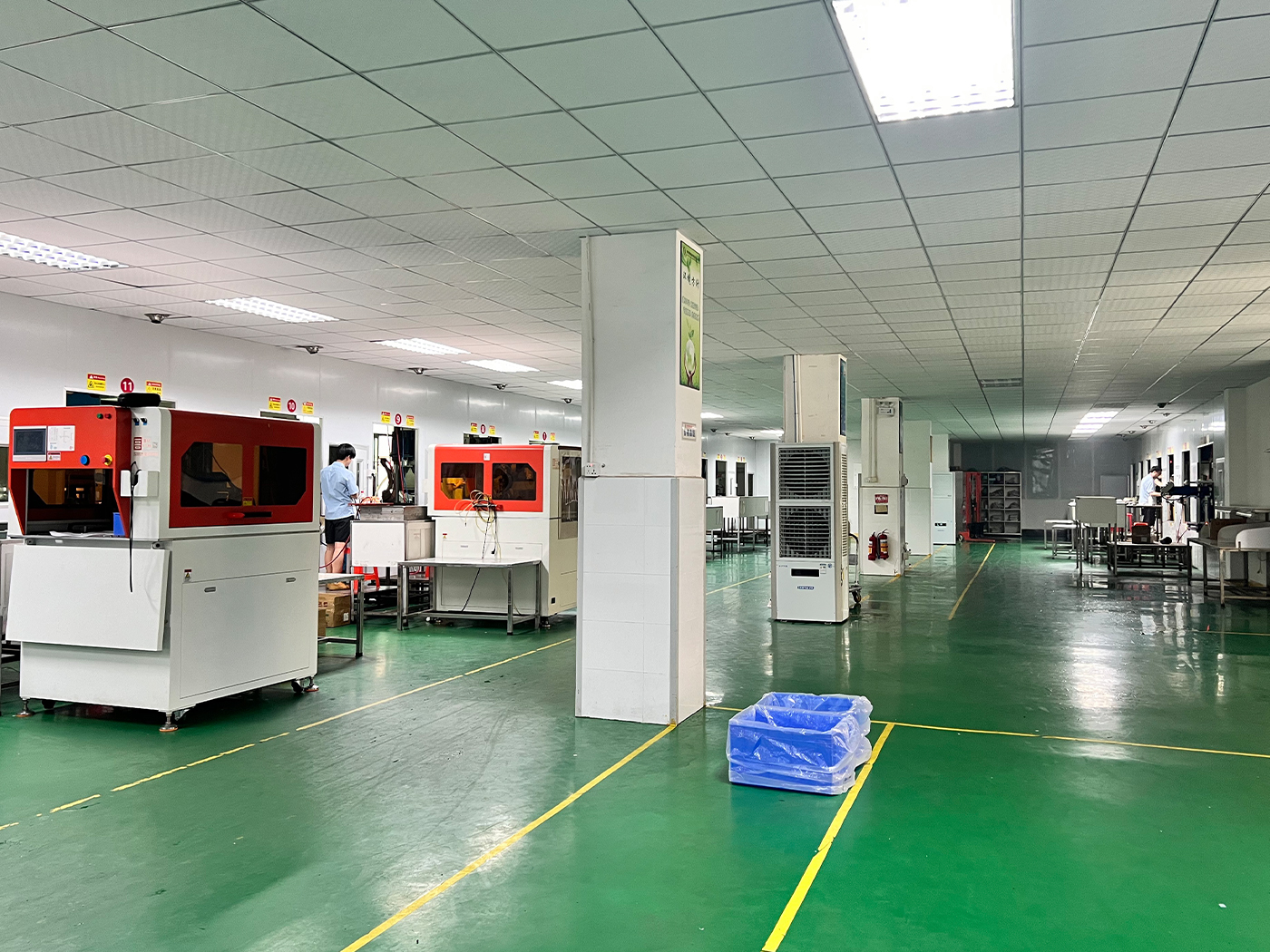
If you are looking for a Chinese silicone products manufacturer for wholesale purchasing, OEM development, or private-label projects, Kangde is one supplier you can consider.
Kangde Rubber Products Co., Ltd. focuses on silicone product manufacturing and international wholesale cooperation, serving businesses looking for practical product solutions and customized production.
Our product range includes silicone baby products, silicone kitchenware, baking molds, household silicone accessories, and other custom silicone products.
We support business buyers with:
OEM and ODM customization: Product designs, sizes, colors, logos, and packaging.
Wholesale orders: Manufacturing solutions for distributors, importers, and retailers.
Custom product development: Support for product ideas and mold development.
Product samples: Evaluate product quality and specifications before bulk purchasing.
Factory-direct cooperation: Communicate directly about product requirements, pricing, and production arrangements.
Whether you need existing silicone products for wholesale or want to develop a product under your own brand, our team can discuss your requirements and provide a suitable quotation.
Tell us what you need to manufacture, and we will help you evaluate the product specifications, customization options, and purchasing costs.
Website: https://www.kangdesilicone.com/
Start by searching for manufacturers with experience in your specific product category. Check their business information, factory capabilities, material documentation, customization services, and sample quality. Compare at least three suppliers before placing a bulk order.
A manufacturer operates its own production facilities and manages manufacturing processes. A trading company usually purchases products from factories and resells them to international buyers.
Both can provide useful services, but buyers should understand who actually controls production, quality inspection, and delivery.
MOQ varies depending on product design, size, production process, mold requirements, and packaging.
Existing products may have different minimum quantities from fully customized products. Always ask the manufacturer for MOQ options based on your specific design.
Yes. Many manufacturers offer private-label services, including logo printing, embossing, debossing, and customized packaging.
Confirm the available logo methods and request a sample before approving bulk production.
Ask the manufacturer for material specifications and relevant food-contact test reports. Check whether the documentation covers the actual product, material, and intended application.
Do not rely only on a supplier's verbal claim that a product is food-grade.
The timeline depends on whether an existing mold can be used or a new mold must be developed.
A custom project may involve design confirmation, mold production, sample approval, mass manufacturing, and shipping. Ask for a stage-by-stage schedule before placing an order.
Many suppliers offer samples or small trial orders, although availability and costs vary by product.
For new product development, it is generally better to approve a sample before committing to mass production.
To receive an accurate quotation, prepare:
Product photos or design drawings.
Required dimensions and colors.
Material and intended application.
Estimated order quantity.
Logo and packaging requirements.
Destination country.
The more specific your requirements are, the easier it is for the manufacturer to provide an accurate quotation.
If you plan to build your own brand, develop unique products, or sell customized silicone items, OEM and ODM capabilities can be valuable.
They allow you to work with a supplier on product design, mold development, branding, and packaging instead of purchasing only standard catalog products.
Verify the company's business information, confirm the beneficiary account, review the quotation and contract, approve the product specifications and sample, and agree on quality inspection and delivery terms.
Avoid making a large payment based only on a website or an informal conversation.
Finding a reliable silicone products manufacturer in China is a process of verification, not simply price comparison.
The most important factors are genuine manufacturing capabilities, consistent product quality, transparent communication, relevant compliance documentation, and the ability to support your business as it grows.
Whether you are sourcing silicone kitchenware, baby products, baking molds, or developing a new private-label product, choosing the right manufacturing partner can reduce purchasing risks and create a more stable supply chain.
Looking for a silicone products manufacturer in China? Contact Kangde to discuss your wholesale, OEM, or ODM requirements.