Quick Answer / Summary
Silicone Minimum Order Quantity (MOQ) is governed by four main factors: raw material batch mixing size (minimum 20–50 kg per color run), machine/mold setup time, customization level (custom Pantone colors, logo printing, special packaging), and item weight/size. While off-the-shelf stock items carry low MOQs (50–200 pcs), fully custom OEM silicone products usually require 1,000 to 3,000 pcs to keep unit costs economical.
Why Does Silicone Have an MOQ?
Whether you are an Amazon seller sourcing custom baby teethers or a procurement manager ordering kitchenware, understanding MOQ helps you negotiate better terms and avoid over-budgeting.
Silicone production isn’t like digital printing where you press "print" for a single item. High-temperature vulcanization and molding require significant preparation before a single finished piece comes off the line.
Here are the 4 core drivers behind silicone MOQs:
1. Raw Material Color Mixing (Batch Size)
Raw silicone starts as an uncolored base. To create your specific color (e.g., a custom pastel pink), technicians must mix raw silicone with color pigments on a heavy two-roll mill.
-
The minimum batch for color compounding is typically 20 kg to 50 kg.
-
If a single baby bib weighs 100 grams, a 20 kg batch yields 200 pieces minimum. For a small 20-gram teether, that same 20 kg batch creates 1,000 pieces.
2. Mold Preparation & Machine Setup Costs
Before running a production batch, engineers must install heavy steel or aluminum molds onto compression or injection molding machines, heat them to over 160°C (320°F), and calibrate pressure settings.
-
Machine warmup and calibration waste time and raw material.
-
Running only 50 custom pieces would make the setup cost higher than the product itself. Spreading setup costs over 1,000+ pieces drops the unit price drastically.
3. Customization & Branding (Logos & Packaging)
Adding a custom logo via silkscreen printing, laser etching, or custom retail packaging creates additional setup hurdles. Printing presses require custom plates and color ink preparation, which naturally pushes up the minimum order requirement.
4. Product Weight and Dimensions
Heavy silicone items (like large dish drying mats or heavy-duty bakeware) consume raw material quickly, reaching the material batch weight threshold in fewer units (MOQ 300–500 pcs). Lightweight items (like silicone wristbands or small gaskets) require thousands of units (MOQ 2,000–5,000 pcs) to meet the same material run.
Standard vs. Custom Silicone MOQ Comparison
| Order Category |
Typical MOQ |
Customization Options |
Cost Impact |
Ideal For |
| Stock / Ready-to-Ship |
50 – 200 pcs |
Standard factory colors, simple sticker logo |
Lowest unit price risk |
Market testing, small retail stores, boutique brands |
| Semi-Custom (ODM) |
500 – 1,000 pcs |
Factory colors + custom silkscreen logo & retail packaging |
Low setup fees |
Growing e-commerce brands, corporate giveaways |
| Full Custom (OEM) |
1,000 – 3,000+ pcs |
Custom mold design, custom Pantone color, custom packaging |
Higher initial tooling cost |
Established brands, unique patented product designs |
Working with a Flexible Manufacturer
To balance budget limits with custom design goals, partnering with an experienced factory makes a direct difference.
At
Kangde Silicone Co., Ltd., a premier OEM/ODM manufacturer specializing in finished food-grade silicone products—ranging from baby feeding sets and teethers to heat-resistant kitchenware—we help clients optimize production efficiency. By utilizing existing stock tooling or matching standard factory colorways, brands can launch custom-branded food-grade silicone lines with manageable MOQs while maintaining strict international quality standards (FDA & LFGB compliant).
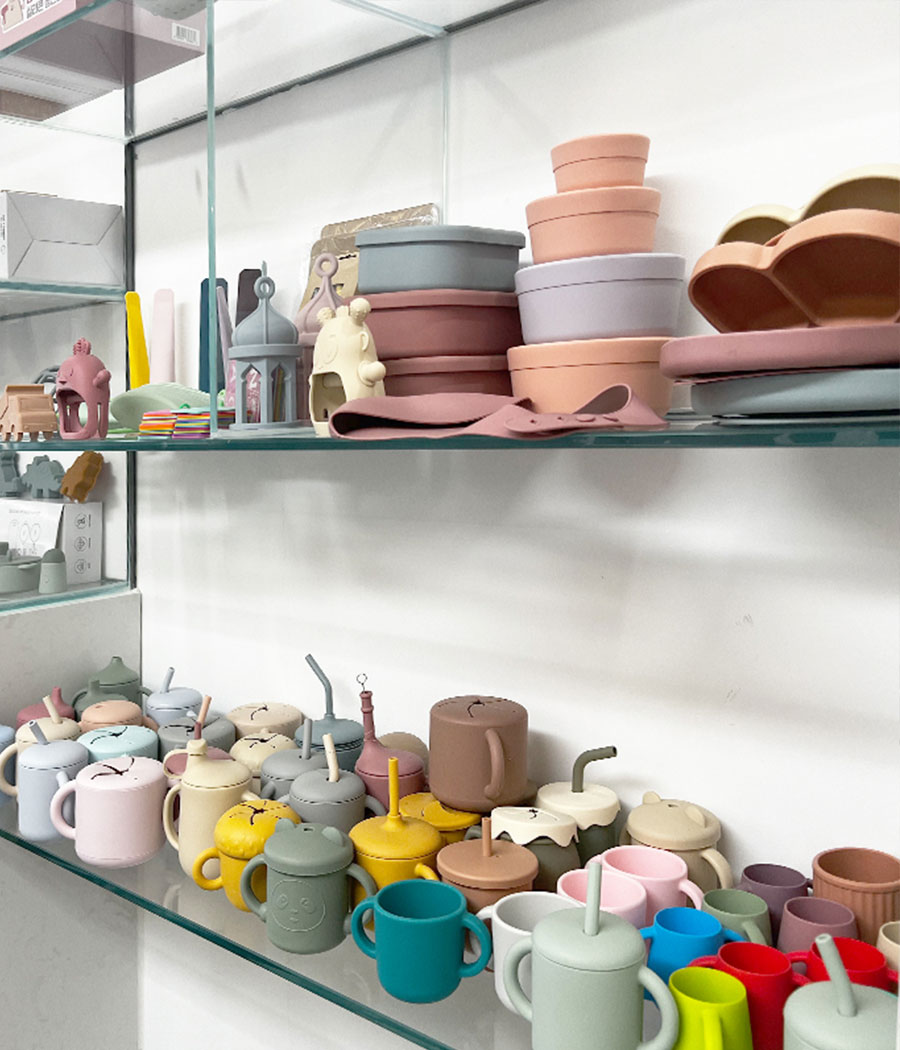
3 Ways to Lower Your Custom Silicone MOQ
-
Choose Factory Standard Pantone Colors: Factories stock popular raw colors (e.g., dusty rose, sage green, light grey). Choosing a color already on the factory floor waives the raw material batch mixing minimum.
-
Use Silkscreen Logos Instead of Custom Molds: Debossed or embossed logos require a custom steel mold ($800–$3,000+). Silkscreen printing uses stock molds and only requires a low-cost print plate ($30–$50).
-
Consolidate Colors Across SKUs: If you are launching three different baby products, manufacture them all in the same color run. This fulfills the material batch weight across multiple product lines simultaneously.
Frequently Asked Questions (FAQ)
Can I order below the factory MOQ if I pay extra?
Yes, many manufacturers allow "under-MOQ" orders if you cover a Low Quantity Surcharge (typically $50–$150) to offset machine setup and material waste.
Why is liquid silicone rubber (LSR) MOQ higher than solid silicone?
LSR uses automated high-precision injection machinery. Feeding raw liquid silicone into the pumps requires larger material runs and complex cleanup, pushing standard LSR MOQs higher (usually 3,000 to 5,000+ units).
Does custom packaging affect product MOQ?
Often, yes. Custom color-printed retail boxes or header cards have their own printing press MOQs (typically 1,000 to 3,000 units). You can store extra boxes at the factory for future production runs.


