When to Introduce Sippy Cup with Straw
Introducing a sippy cup with a straw to your baby is an important milestone in their development. It supports oral motor skills, eases the transition from bottles, and promotes independence. Here’s a practical and straightforward guide to help you navigate this process.
When to Introduce a Straw Cup
The ideal time to introduce a straw cup is around 6 months of age, when your baby starts solid foods and can sit up with minimal assistance. At this stage, babies are developing the necessary motor skills and coordination for drinking from a straw. Some experts suggest offering a straw cup after your baby has practiced with an open cup, but you can introduce both around the same time.
Why Choose a Straw Cup Over a Spouted Sippy Cup
Straw cups are highly recommended by feeding specialists and pediatricians for several reasons:
Promotes Oral Development: Drinking from a straw encourages a mature swallowing pattern, strengthens lip and cheek muscles, and supports proper tongue positioning.
Better for Speech Development: Unlike hard-spouted sippy cups, which can restrict tongue movement and potentially affect speech, straw cups support oral-motor skills crucial for clear speech.
Lifelong Skill: Learning to drink from a straw is a practical, lifelong skill, while spouted sippy cups are a temporary transition tool.
Reduces Cavity Risk: Straw cups minimize liquid pooling around teeth, lowering the risk of cavities compared to bottles or spouted sippy cups.
How to Teach Your Baby to Use a Straw Cup
Some babies figure out straw drinking quickly, but most need guidance. Here are two effective methods:
Pipette Method:
Dip a regular straw into a liquid (water, breast milk, or formula).Plug the top with your finger to trap a small amount inside.Place the other end in your baby’s mouth and release the liquid when their lips close around the straw.Repeat until they associate sucking with liquid flow.
Squeeze Method:
Use a clear, squeezable straw cup (e.g., Honey Bear Cup).Gently squeeze the cup to push liquid up the straw when your baby’s lips are wrapped around it.This helps them understand that sucking brings liquid up.
Tips for Success:
Start with Water: Offer water in the straw cup during meal times. Avoid juices or sugary drinks.
Use Thicker Liquids: If your baby coughs or struggles, try thicker liquids like smoothies or yogurt drinks, which flow slower and are easier to manage.
Model and Praise: Drink from a straw yourself to demonstrate. Celebrate your baby’s attempts with positive reinforcement1.
Choose the Right Cup: Opt for cups with silicone straws that are soft and easy to suck. Avoid cups with bite valves, as these don’t promote natural sucking.
Recommend silicone material drinking cups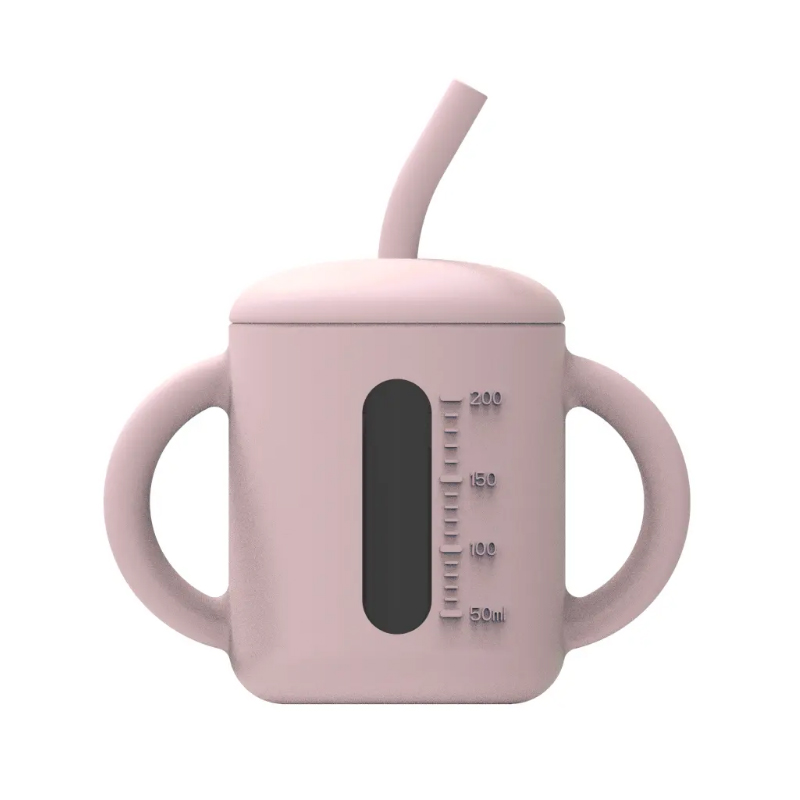
Silicone straw cups are an excellent choice for beginners. Silicone is soft, gentle on gums (especially during teething), and durable. Look for food-grade silicone straws that are free from BPA, PVC, and other toxins718. Silicone straws are often flexible and easy for babies to latch onto, making the learning process smoother.
Silicone Straw Cup Features to Look For:Soft, Flexible Straws: Gentle on gums and easy to suck.
Leak-Proof Design: Prevents messes during play or travel.
Easy to Clean: Minimal parts and dishwasher-safe for hygiene.
Ergonomic Design: Handles or grippy surfaces help little hands hold the cup securely.
When to Seek Help?
If your baby consistently coughs, chokes, or shows difficulty swallowing after repeated practice, consult your pediatrician. These could be signs of an underlying issue needing professional guidance.
Conclusion
Introducing a straw cup around 6 months of age supports your baby’s oral development and independence. Silicone straw cups are a safe, practical choice due to their softness and durability. With patience, modeling, and the right cup, your baby will soon master this important skill. Remember, every child learns at their own pace, so keep practice sessions positive and enjoyable.


