100% Food-Grade Silicone and 18/8 (304) Stainless Steel are the healthiest, safest materials for kids' plates. Both materials are non-toxic, 100% free from BPA, phthalates, and microplastics, and will not leach chemicals into warm or acidic food.
Best for Babies & Toddlers: Food-Grade Silicone (unbreakable, soft on tender gums, microwave-safe, built-in suction).
Best for Older Kids & Daycares: 304 Stainless Steel (indestructible, non-porous, stain-resistant, 100% recyclable).
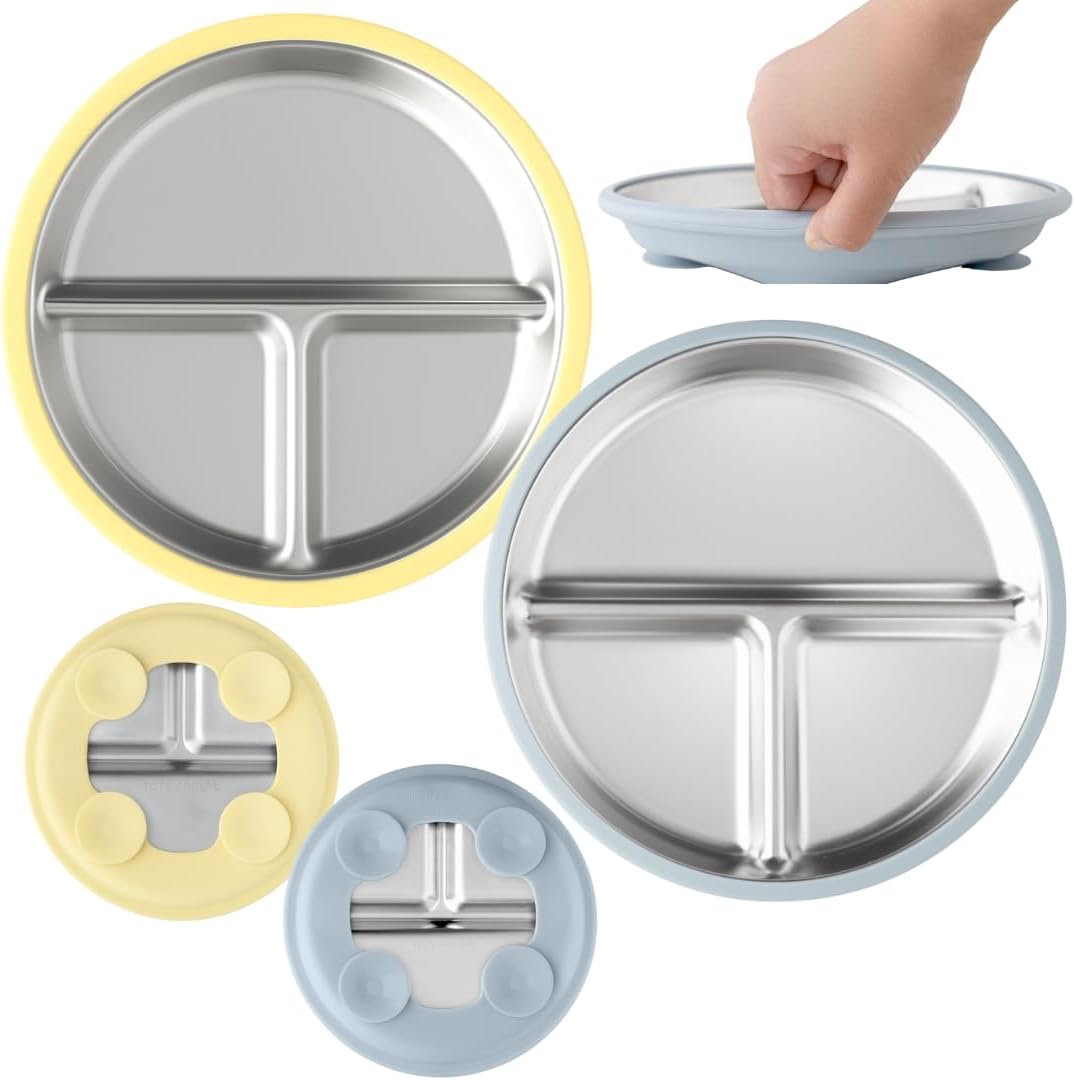
When serving warm meals to children, material stability is essential. Recent food safety testing and consumer studies reveal two key risks with traditional kids' tableware:
Microplastic Release from Heated Plastics: Research shows that heating plastic dishware (even labeled "BPA-free") in microwaves can release millions of microplastic particles per square centimeter into food.
Hidden Fillers in Bamboo Fiber: Many commercial "bamboo fiber" plates rely on melamine-formaldehyde resins as a binder. Global safety authorities (such as European and US regulatory agencies) warn that high temperatures or acidic foods can cause melamine glue to breakdown and migrate into food.
Choosing non-porous, heat-stable materials protects children while extending product lifespan.
Here is how the most common kids' plate materials compare across health safety, durability, and daily use:
| Material | Safety Rating | Heat Stability | Breakage Risk | Best Suited For |
| Food-Grade Silicone | A+ (Safest) | High (Microwave & Oven Safe) | None (Unbreakable) | Toddlers & Self-Feeding |
| 304 Stainless Steel | A+ (Safest) | Very High (Not Microwave Safe) | None (Indestructible) | School Kids & Commercial Daycares |
| Glass / Ceramic | A (Non-Toxic) | High | High (Shatter Hazard) | Older Children (Supervised) |
| Plastics (PP / Polypropylene) | C (Microplastic Risk) | Low to Moderate | Low | Cold snacks / Short term |
| Bamboo-Melamine Blends | D (Leaching Risk) | Low (Avoid Hot Food) | Moderate | Dry, room-temp finger foods |
Silicone is derived from silica (quartz sand) and processed into an inert, rubber-like material.
Zero Chemical Leaching: Remains stable from freezing temperatures up to 220°C (428°F).
Parent & Kid Friendly: Dishwasher-safe, microwave-safe, and flexible so it won't break when tossed from a high chair.
Buyer Tip: Look for FDA or LFGB food-contact certification to ensure zero plastic fillers.
Stainless steel is the gold standard for hygienic food service in schools, hospitals, and homes.
Hygienic & Non-Porous: Leaves no places for bacteria or lingering food odors to hide.
100% Inert: Free of plastic coatings, chemical dyes, or synthetic resins.
Long-Term Value: Extremely durable for high-use environments like nurseries and catering.
Yes. "BPA-free" plastic often substitutes BPA with alternative compounds (like BPS) that can still degrade when heated. Food-grade silicone contains no plastic polymers, meaning zero microplastics or plasticizer chemicals.
Perform the quick "Pinch Test": pinch and twist a flat section of the silicone. If white lines appear through the bend, cheap plastic fillers were added. Pure food-grade silicone maintains a solid, uniform color.
Solid wood or natural raw bamboo is safe, but molded "bamboo powder" tableware almost always relies on melamine binder. It is best to avoid using melamine-bamboo dishes for microwave heating or serving hot, acidic foods.


