Conclusion: Sensory toys actively stimulate a baby’s developing nervous system by engaging their senses—touch, sight, sound, and movement. Between birth and 24 months, when over 80% of brain development occurs, sensory toys build neural pathways, accelerate fine motor skills, foster cause-and-effect learning, and provide crucial emotional self-soothing during teething and transitional phases. For parents, they are essential developmental tools; for retail buyers and distributors, they represent one of the fastest-growing categories in the early childhood market.
4 Core Benefits of Baby Sensory Toys
1. Build Neural Connections
Every time a baby touches a textured surface, hears a soft rattle, or looks at a high-contrast pattern, brain cells fire together and create permanent neural pathways. Sensory toys provide controlled, focused stimuli that turn raw reactions into intentional brain activity.
2. Accelerate Motor Skill Development
-
Fine Motor: Squeezing, pinching, and grasping textured silicone or fabric builds hand strength and dexterity necessary for future milestone tasks like holding a spoon or pencil.
-
Gross Motor: Reaching for bright, moving, or sound-making toys encourages rolling, crawling, and physical exploration.
3. Provide Emotional Self-Soothing
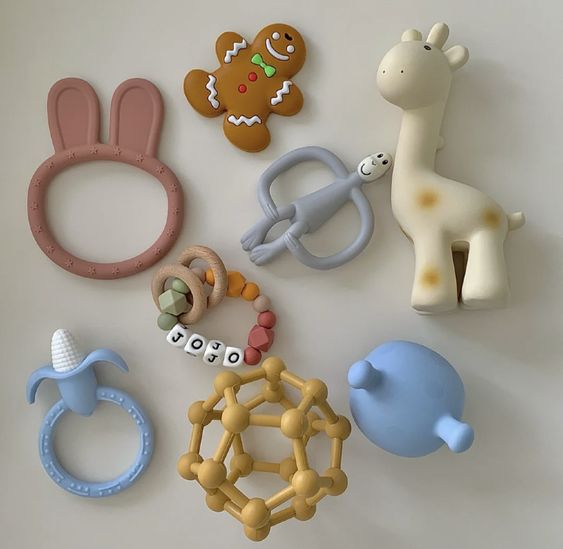
Tactile input helps infants regulate their nervous system. Soft, chewable textures (especially 100% food-grade silicone) offer gentle pressure on sore gums during teething, relieving distress and helping infants learn self-soothing mechanisms.
4. Teach Cause and Effect
Interactive toys—such as pressable silicone popping bubbles, shakeable rattles, or squeeze toys—teach babies that their actions produce real-world results. This simple feedback loop forms the foundation of logical thinking and problem-solving.
Sensory Toy Comparison Guide
| Toy Category |
Primary Developmental Focus |
Best Age Range |
Key Sourcing & Safety Specs (Shopper & B2B Checklist) |
| Tactile & Teething Toys |
Fine motor skills, gum relief, tactile exploration |
0–12 Months |
Food-grade silicone, BPA/Phthalate-free, dishwasher/boil-safe, single-mold design (no choke hazards). |
| Visual & High-Contrast |
Visual tracking, focus, brain stimulation |
0–6 Months |
Non-toxic inks, high contrast (black, white, red), durable fabric or wipeable smooth surfaces. |
| Auditory Toys (Rattles/Crinkle) |
Sound localization, cause-and-effect |
3–18 Months |
Sealed sound units, smooth edges, lightweight for small hands. |
| Manipulative & Stacking |
Hand-eye coordination, spatial awareness |
6–24 Months |
Flexible, drop-resistant material, rounded corners, non-toxic food-contact compliance (FDA/LFGB/EN71). |
Key Material & Safety Standards for Buyers
Whether purchasing for home use or sourcing inventory for a retail shop, safety and cleanability are non-negotiable:
-
Safety Compliance: Look for certified compliance with global safety benchmarks (ASTM F963, EN71, FDA, and LFGB).
-
Hygienic Design: Babies explore with their mouths. Prioritize mold-resistant materials like 100% food-grade silicone or sealed plastics that tolerate high-temperature sterilizing and dishwashers.
-
Durability: High-tensile, flexible materials prevent tearing under intense chewing or tossing, eliminating small choke hazards.
Frequently Asked Questions
At what age should babies start using sensory toys?
Babies can start using sensory toys from birth. High-contrast visual cards and soft tactile blankets are ideal for newborns (0–3 months), while chewable teether toys and rattles become key around 3–6 months as grasping instincts develop.
Can sensory toys help with teething?
Yes. Textured silicone sensory toys give babies appropriate counter-pressure against tender gums, helping soothe discomfort while satisfying their natural instinct to explore objects by mouth.
What are the safest materials for baby sensory toys?
100% Food-Grade Silicone and natural, untreated wood are top choices. Silicone is non-porous, inherently resistant to mold/bacteria, free from harmful chemicals (BPA, PVC, Phthalates), and easy to sterilize.
Why are sensory toys important for wholesale and retail inventories?
Sensory toys hold a year-round, high-volume market position driven by parents prioritizing early childhood development and non-toxic safety. Products combining multiple functions (e.g., teether + stacking toy) yield high shelf-appeal and strong reorder rates.


