When choosing bath toys for your baby, the decision shouldn't just be about cuteness—it’s about microbiology, safety standards, and developmental milestones. Based on 2025-2026 consumer safety reports and pediatric development data, the best bath toys are those that balance sensory engagement with a design that prevents bacterial growth.
If you are looking for the most practical and safe options right now, here is the data-backed conclusion:
Best for Hygiene: Hole-free or "Twist-apart" toys. Research shows that 90% of traditional squirting toys harbor fungal biofilms (mold) within weeks.
Best for Development: Stacking and pouring cups. These promote fine motor skills and "cause and effect" learning.
Best for Longevity: Recycled HDPE (High-Density Polyethylene). It is incredibly durable, dishwasher-safe, and has a lower carbon footprint than new plastics.
Material Verdict: While Food-Grade Silicone is excellent for teething and soft-touch safety, Hard Recycled Plastic is superior for complex mechanical toys (like gears and pipes).
According to a landmark study by the Swiss Federal Institute of Aquatic Science and Technology (Eawag), the "black gunk" found inside flexible bath toys can contain up to 73 million cells of bacteria per square centimeter, including Legionella and Pseudomonas aeruginosa.
To mitigate this, the 2026 market has shifted toward two primary solutions:
Hermetically Sealed Designs: No holes means no water gets in, eliminating the environment for mold.
Open-Architecture Designs: Toys that can be opened, wiped, and dried completely.
The Science: Babies at this age have limited color perception and are developing their "pincer grasp."
Recommendation: High-contrast Silicone Sensory Balls. Choose textured, solid silicone balls. They provide tactile stimulation and are safe for the "mouth-exploration" phase.
The Science: This is the peak age for learning "gravity" and "volume."
Recommendation: Stacking Cups with Drainage. Brands like Kangde silicone offer cups with varied hole patterns. Data suggests that simple pouring tasks improve hand-eye coordination by 15-20% in early toddlers.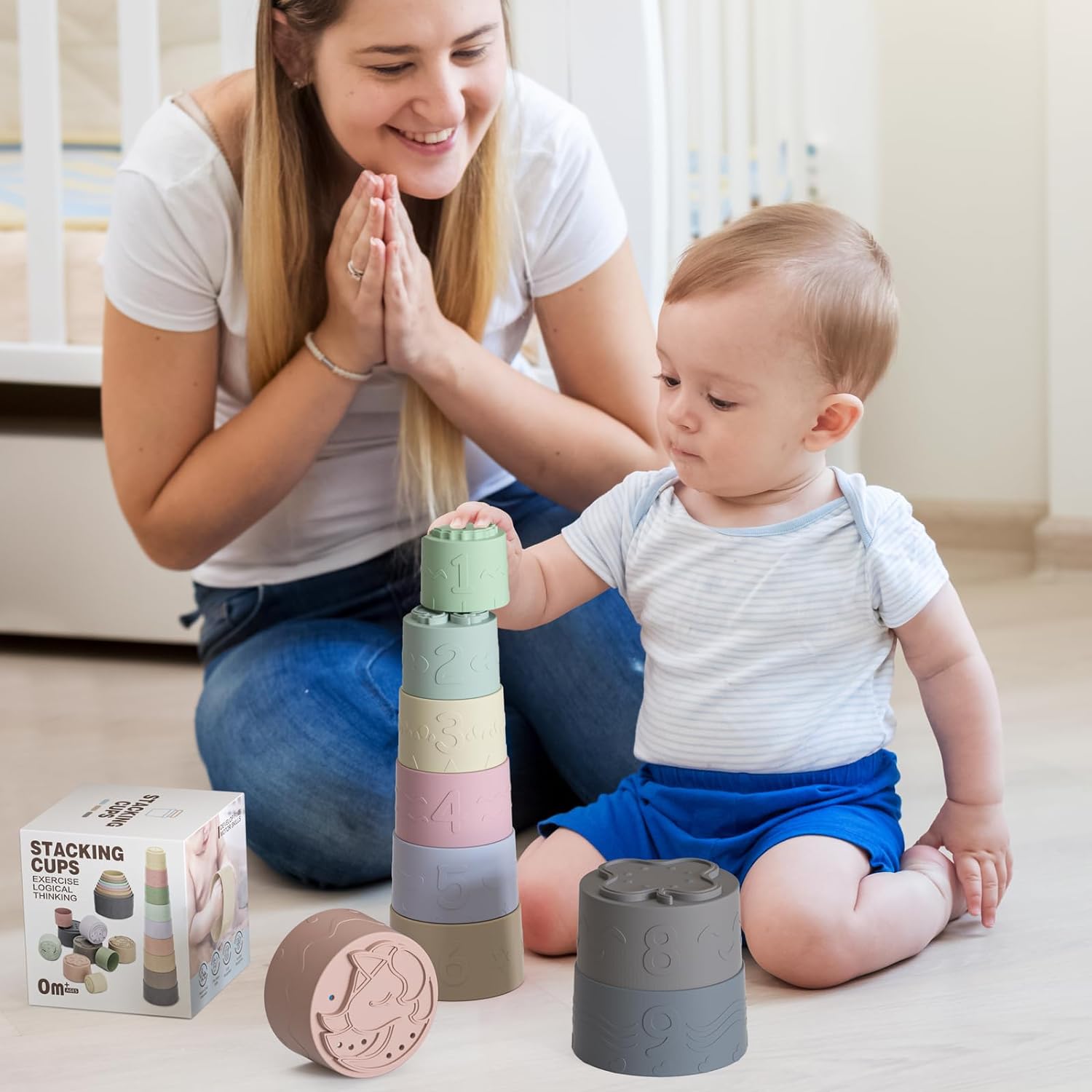
The Science: Toddlers begin to understand mechanics and cause-and-effect.
Recommendation: Suction Pipe & Gear Systems (Boon/Quut). These toys allow children to build "water circuits." They are generally made of durable, PVC-free hard plastics that hold their shape against the weight of flowing water better than silicone.
Even the best toy can become a hazard if neglected. Data-backed hygiene tips include:
The 10% Vinegar Soak: A weekly soak in 1 part white vinegar to 9 parts water is an eco-friendly way to kill 99% of surface bacteria.
Mesh Storage: Always use a mesh bag hung away from the showerhead. Toys stored in solid plastic bins have a 4x higher rate of slime development due to trapped humidity.
The "Squeeze Test": For any toy with a hole, if the water comes out cloudy or with black flecks, discard it immediately. The internal biofilm cannot be fully cleaned.
Q1: Are "BPA-Free" plastic toys always safe?
Not necessarily. Look for "Phthalate-free" and "PVC-free" as well. Some older plastics use BPS (Bisphenol S) as a substitute for BPA, which may have similar endocrine-disrupting effects.
Q2: Can I put all bath toys in the dishwasher?
Most hard plastics (HDPE, Polypropylene) and 100% silicone are dishwasher-safe. However, toys with batteries (light-up toys) or those made of soft PVC/Rubber can melt or leak battery acid. Always check the manufacturer's heat rating.
Q3: Why shouldn't I use foam toys for a teething baby?
While EVA foam is great for "sticking" to the tub walls, it is easily bitten through. Small foam pieces can become a significant choking hazard for babies under 12 months.
Q4: Is silicone better than plastic?
For teething and soft play, yes. For functional toys (like a toy boat that needs to float upright or a water mill that needs to spin), high-quality, recycled hard plastic is often more functional and just as safe.


