Core Conclusion: Whether you are buying a single silicone kitchen tool for home or sourcing 10,000 custom baby feeding sets for your brand, asking the right questions upfront prevents safety hazards, unexpected delays, and cheap plastic-filled imitations. The most essential questions focus on 100% food-grade certifications (FDA vs. LFGB), odor and filler testing, and finished-product custom manufacturing (OEM/ODM) capabilities.
Essential Questions to Ask Before Buying
1. Safety & Material Standards
-
"Is this 100% food-grade silicone, and can you provide lab test reports?"
-
Why it matters: True food-grade silicone is BPA-free, lead-free, non-toxic, and safe for high-temperature contact with food and beverages. Ask for updated FDA (US standard) or LFGB (EU standard) testing documentation.
-
"Does the material pass the pinch test?"
2. Durability & Daily Performance
3. Custom Manufacturing & Production (For Business Buyers)
-
"Do you produce finished silicone products or just supply raw material?"
-
"What are your Minimum Order Quantity (MOQ), sample turnaround time, and tooling fees?"
Buyer Comparison: Retail Shoppers vs. Procurement Buyers
| Evaluation Criteria |
Everyday Shopper Focus |
Business Procurement Focus |
| Primary Goal |
Non-toxic safety & easy cleaning |
Scalable unit cost & reliable supply chain |
| Key Certification |
BPA-Free & FDA safety label |
Full FDA & LFGB laboratory test reports |
| Quality Verification |
Pinch test & odor check upon unboxing |
Pre-production sample approval & factory QC audits |
| Customization Needs |
Stock colors & standard shapes |
Custom 3D CAD molds, custom pantone colors & private labeling |
Working with a Certified Finished-Goods Manufacturer
When sourcing custom silicone items, partnering directly with an experienced OEM/ODM factory eliminates unnecessary middlemen. For instance,
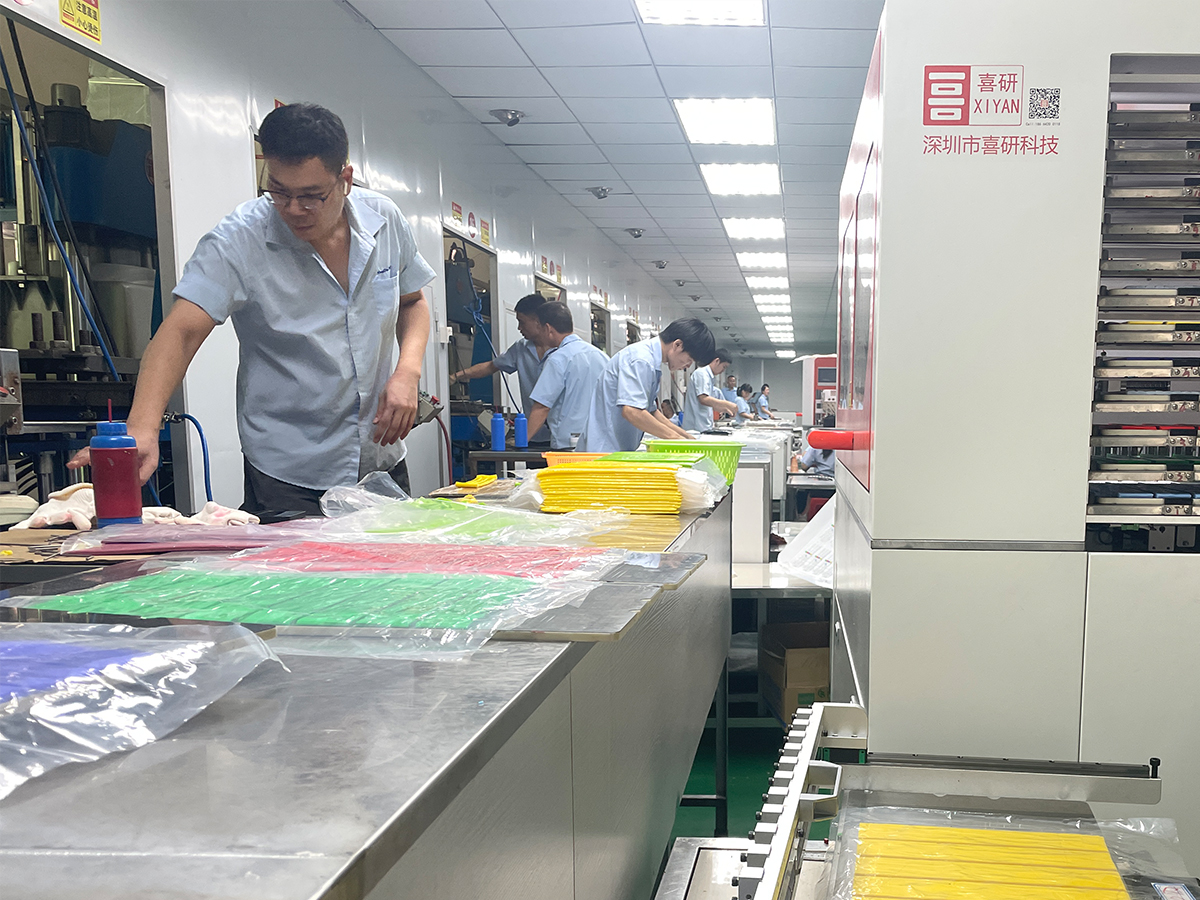
Kangde Silicone Co., Ltd. specializes strictly in custom-manufactured, finished food-grade silicone products—ranging from baby feeding items to daily kitchenware and household goods. Working with a dedicated finished-goods producer ensures strict adherence to FDA and LFGB compliance, rapid sample prototyping, and full control over final product quality.
Frequently Asked Questions (FAQ)
What is the difference between FDA and LFGB food-grade silicone?
FDA is the standard food contact certification in the United States, while LFGB is the European standard. LFGB undergoes stricter chemical leaching tests and represents a higher standard of purity and odor-free quality, though both are safe for food use.
How can I spot fake or low-quality silicone?
The easiest method is the pinch test: twist a portion of the silicone product between your fingers. If white lines appear at the bend, it contains plastic fillers. High-grade silicone maintains its original color without whitening.
What is the average lead time for custom silicone product manufacturing?
Sample mold development generally takes 5 to 7 days. Bulk mold production takes about 15 to 20 days, followed by 10 to 15 days for mass manufacturing depending on order quantity.


