Yes, but it depends entirely on the material. While many kid plates are marketed as "non-toxic," only specific materials can safely withstand the heat of a microwave without leaching chemicals or degrading.
The Safe Winners: 100% Food-Grade Silicone (FDA or LFGB certified) and tempered glass/ceramic are completely non-toxic and microwave-safe. They do not leach chemicals, warp, or release microplastics when heated.
The Hidden Dangers: Melamine, bamboo composites (which use plastic binders), and stainless steel should never go into the microwave.
The Gray Area: "BPA-Free" plastics or bioplastics might be labeled "microwave safe," but recent studies show that heat accelerates the release of microplastics and alternative chemical plasticizers (like BPS or BPF).
When parents search for non-toxic children's dinnerware, they are usually trying to avoid endocrine disruptors like Bisphenol A (BPA) and phthalates. However, a plate that is perfectly safe at room temperature can become hazardous when exposed to microwave radiation and high temperatures.
When unsafe materials are microwaved, two things happen:
Chemical Migration: High heat breaks down polymer chains, causing chemical stabilizers, heavy metals, or formaldehyde glues to migrate directly into your child's food—especially if the food contains fats or oils.
Microplastic Shedding: Traditional and even some plant-based plastics shed millions of microscopic plastic particles when heated, which are then ingested by toddlers.
To help you audit your kitchen cabinets at a glance, here is how the most common "eco-friendly" and "non-toxic" materials perform under microwave conditions:
| Material Type | Microwave Safe? | Max Temperature Tolerance | Safety & Toxic Risk Factors | Best For |
| 100% Food-Grade Silicone | Yes | Up to 220°C (428°F) | Completely inert; zero BPA, BPS, or heavy metals. Does not leach or warp. | Babies & Toddlers (Drop-proof, suction-capable) |
| Tempered Glass / Ceramic | Yes | High (Oven safe) | Chemically inert and 100% plastic-free. | Older kids (Can shatter if dropped) |
| Stainless Steel | No | N/A (Blocks waves) | Completely non-toxic, but causes sparks/fire hazards in microwaves. | Outdoor/Travel & older toddlers |
| Melamine Plastic | No | Avoid Heat | Leaches toxic melamine and formaldehyde into food when heated. | Avoid entirely for hot foods |
| Natural Bamboo / Wood | No | Avoid Heat | High heat dries out the wood, causing cracking, splitting, and leaching of binding glues. | Dry snacks only |
| BPA-Free Plastic (PP / PLA) | Not Recommended | Varies by brand | May resist melting, but heat triggers the release of microplastics and BPS/BPF. | Cold foods/Snacks |
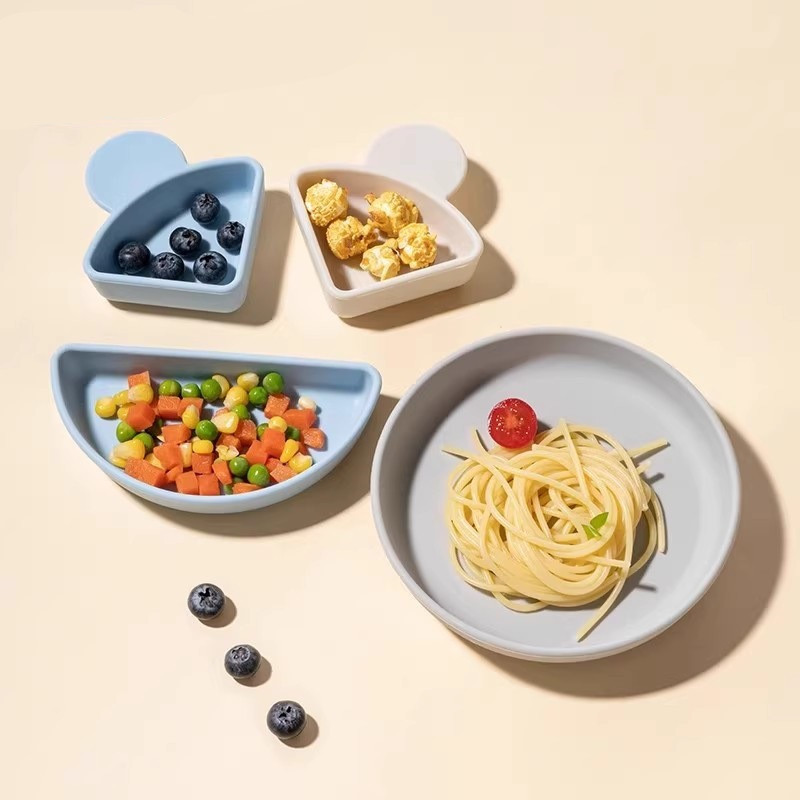
Don't just trust a "microwave safe" stamp on the bottom of a plastic plate. Follow these professional inspection tips to ensure maximum safety for your toddler:
If you are using silicone plates—which are widely considered the gold standard for unbreakable, non-toxic toddler ware—ensure they are 100% pure.
How to do it: Pinch and twist a flat surface of the plate.
The result: If the twisted area turns white, the manufacturer used cheap plastic fillers. When microwaved, those fillers can leach. If the color stays completely uniform, it is 100% pure silicone and safe to heat.
High-quality, truly non-toxic manufacturers will explicitly state compliance with rigorous food safety testing. Look for packaging that mentions:
FDA Food-Grade Compliance: The baseline standard for food contact safety in the US.
LFGB Certified Silicone: The European standard, which features stricter testing requirements for extractable and migratable substances.
Even when using a certified safe material like 100% food-grade silicone, heat can transfer unevenly. Always stir your child’s food thoroughly after microwaving to eliminate dangerous "hot spots," and test the temperature on your own wrist before serving.
Yes. Pure, 100% food-grade silicone is highly heat-resistant (typically up to 220°C / 428°F) and structurally stable. It can safely go from the freezer to the microwave without warping, degrading, or releasing toxic chemicals.
Most children's bamboo plates are not pure wood; they are made from pulverized bamboo fiber held together by a melamine resin or chemical glue. Microwaving degrades these binding agents, causing the plate to crack and allowing chemicals to leach into the food.
It is best avoided. While it lacks BPA, manufacturers often replace it with BPS or BPF, which studies show possess similar endocrine-disrupting properties. Furthermore, heating any plastic accelerates the shedding of microplastics into your child's meal.


