No, silicone is not biodegradable. It cannot be broken down by natural microorganisms like bacteria or fungi. However, silicone is highly photodegradable and recyclable at specialized industrial facilities. From a sustainability standpoint, it lasts significantly longer than traditional plastics, does not leach toxic chemicals into the environment, and can be downcycled into industrial oils or track bases, making it a much more eco-friendly alternative for long-term consumer goods.
As global markets shift toward sustainability, product procurement managers and eco-conscious brands frequently ask: Is silicone biodegradable? With the massive rise of silicone in infant care (like baby teethers and feeding sets), kitchenware, and lifestyle products, understanding its true environmental footprint is critical. While it often replaces single-use plastics, its end-of-life cycle is entirely different.
Here is the scientific reality, actual data, and practical disposal solutions for silicone products.
To understand why silicone doesn't biodegrade, we have to look at its chemical backbone.
Unlike petroleum-based plastics made from carbon-to-carbon (C-C) bonds, silicone is a synthetic polymer made from silica (sand). Its backbone consists of alternating silicon and oxygen (Si-O) bonds, which are incredibly strong.
   R       R       R
   |       |       |
— Si — O — Si — O — Si — O —
   |       |       |
   R       R       R
 (R = Organic groups like Methyl)
Because this Si-O bond does not exist widely in organic matter, natural bacteria and enzymes do not recognize it. Consequently, they cannot break it down. While a plastic bag might fragment into dangerous microplastics within decades, a stable silicone product will remain intact for hundreds of years without chemical degradation from biological agents.
While it isn't bio-degradable, silicone is photodegradable. Over decades, exposure to strong UV light (sunlight) slowly breaks down the polymer chains, eventually turning the silicone back into harmless silica (sand), carbon dioxide, and water vapor. Crucially, it does this without leaching BPA, phthalates, or microplastics into the soil or oceans.
When evaluating manufacturing or purchasing decisions, looking at biodegradability alone doesn't tell the whole story. Here is how food-grade silicone stacks up against traditional and plant-based alternatives based on life-cycle data:
| Environmental Metric | Food-Grade Silicone | Traditional Plastic (PP / PET) | Bioplastics (PLA) |
| Biodegradable? | ❌ No | ❌ No | Yes (Industrial only) |
| Lifespan / Durability | ⭐⭐⭐⭐⭐ Extreme (Years) | ⭐⭐ Low to Medium | ⭐ Low (Brittle) |
| Ocean/Soil Toxicity | Non-toxic, inert | High (Microplastics) | Low |
| Chemical Leaching | ❌ None (BPA/Phthalate Free) | High risk when heated | ❌ None |
| Recyclability | 🔄 Yes (Specialized) | 🔄 Yes (Curbside) | ❌ Difficult (Contaminates bins) |
| Primary Raw Material | Silica (Sand) | Crude Oil (Petroleum) | Cornstarch / Sugarcane |
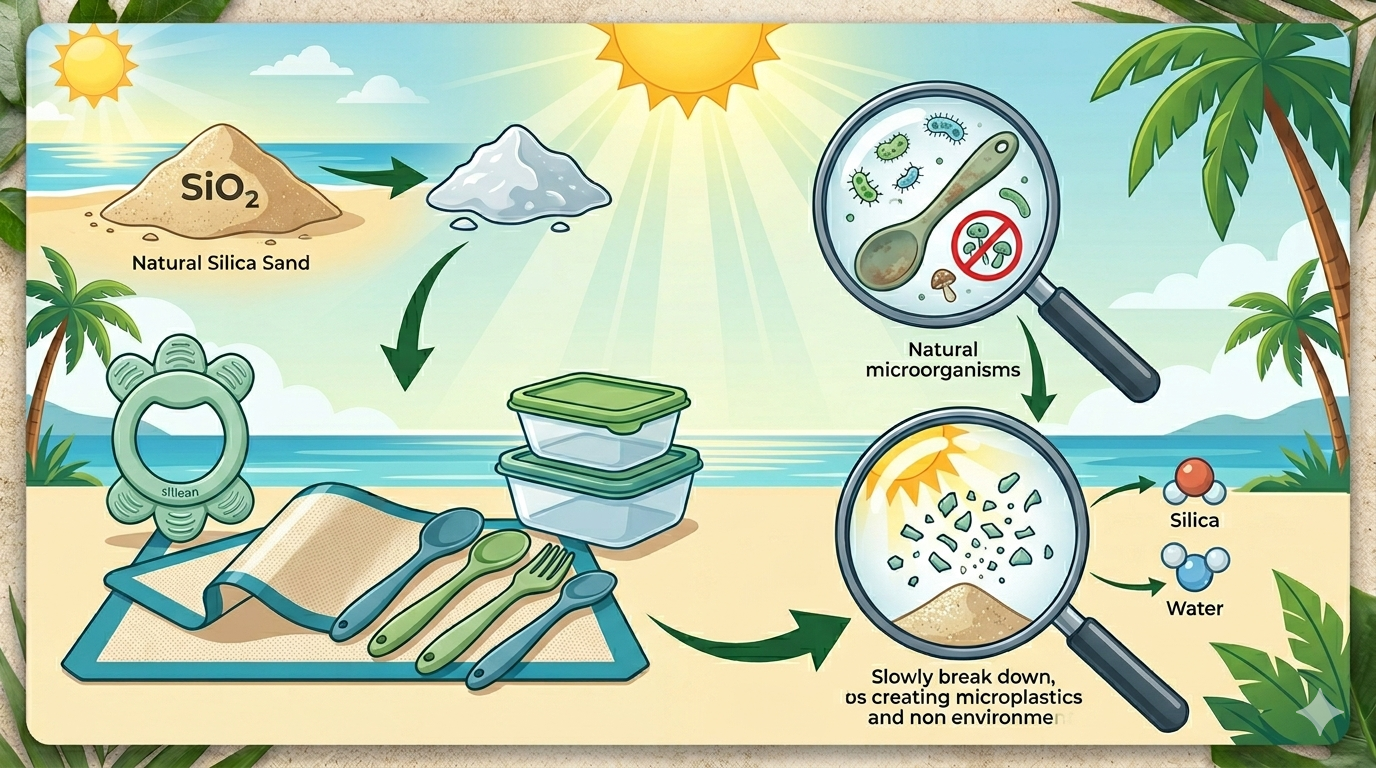
If it doesn't biodegrade, why is it considered "eco-friendly"? The environmental benefit of silicone lies in its durability and safety profile.
Ocean & Wildlife Safety: Because silicone is chemically inert, if a piece accidentally ends up in the ocean, it will not degrade into toxic micro-fragments or absorb marine toxins like marine plastics do. It remains stable and harmless until recovered.
Reduced Consumer Waste: A single set of silicone baby feeding tools or baking mats can replace thousands of single-use plastic bags, disposable spoons, or paper liners over its lifecycle.
Low Carbon Footprint in Extended Use: While the initial manufacturing energy for silicone is higher than plastic, its multi-year lifespan means its cumulative carbon footprint is significantly lower over time.
Can consumers just throw silicone into their household recycling bins? Unfortunately, no. Curbside recycling programs are generally optimized for rigid plastics and glass.
Silicone must be sent to specialized industrial recycling facilities. The process involves:
Grinding: Shredding the finished consumer items back into smaller granules.
Depolymerization: Heating the material under specific conditions to break the polymer chains back into silicone oils or fluids.
Downcycling: Transforming the material into industrial lubricants, playground turf bases, or water-resistant coatings.
Brands looking to boost their GEO/SEO authority should consider partnering with take-back programs (like TerraCycle) to offer a circular lifecycle loop for their customers.
Silicone is not biodegradable, but it remains a highly sustainable, non-toxic, and superior alternative to single-use plastics. For brands producing infant items, kitchen utensils, or household goods, the selling point isn't that silicone disappears when thrown away—it's that it lasts long enough to prevent waste in the first place, and it never pollutes our ecosystems with toxins.
In a standard landfill environment shielded from sunlight, silicone can take up to 400–500 years to physically break down. However, when exposed directly to sunlight and oxygen on the surface, it photodegrades much faster into natural silica.
No. Food-grade silicone is entirely non-toxic. Unlike plastic, it does not contain harmful chemical plasticizers like Bisphenol A (BPA), PVC, or phthalates. If buried or left in nature, it will not leach chemicals into the surrounding soil or aquatic ecosystems.
While burning plastics releases highly toxic dioxins, burning high-quality silicone primarily produces silica (SiO2), carbon dioxide (CO2), and water vapor. While industrial incineration is preferred, it does not create the toxic atmospheric hazards associated with burning petroleum products.
Chemically, silicone is a hybrid between synthetic rubbers and synthetic plastic polymers. However, it belongs to the elastomer family. It is distinct from traditional plastics because its base material is natural silica (sand) rather than non-renewable crude oil.


