
Custom silicone product manufacturing costs depend on product design, mold complexity, silicone material, production quantity, and finishing requirements. For B2B buyers, the total investment usually includes two main parts: a one-time mold development cost and a recurring production cost per unit.
A simple silicone product may require a relatively affordable mold, while complex products with multiple components, special colors, printing, or precision requirements need a larger investment.
The best way to control costs is to evaluate the entire project, not just the quoted unit price. Choosing the right manufacturing process, confirming the design before mold production, and ordering a suitable quantity can significantly reduce the total cost.
This guide explains the main costs of custom silicone manufacturing, provides practical budgeting examples, and shows how to get a more accurate quotation from a silicone manufacturer.
There is no fixed price for all custom silicone products. A silicone kitchen utensil, baby feeding product, pet toy, and industrial silicone component have different material, mold, and production requirements.
For initial budgeting, the following figures provide useful reference ranges.
| Mold Type | Estimated Cost (USD) | Typical Application |
|---|---|---|
| Simple prototype mold | $800–$3,000 | Initial samples and design testing |
| Single-cavity production mold | $1,000–$5,000 | Simple custom silicone products |
| Multi-cavity compression mold | $3,000–$10,000 | Medium-volume production |
| Complex production mold | $5,000–$20,000+ | Detailed or multi-part products |
| LSR injection mold | $10,000–$50,000+ | Precision and high-volume production |
Note: These are indicative budgeting ranges compiled from publicly published manufacturer pricing references, not fixed industry prices or a quotation. Actual tooling costs depend on product geometry, mold material, cavity count, production process, and technical requirements.
For example, published supplier guides show that simple compression molds can start at around $1,000, while complex multi-cavity tooling can reach $20,000 or more. LSR injection tooling generally requires a higher initial investment.
The manufacturing price per piece also varies considerably.
| Cost Factor | What Determines the Cost? |
|---|---|
| Silicone material | Material grade, hardness, color, and weight |
| Product size | Amount of silicone required per piece |
| Product structure | Shape, thickness, details, and complexity |
| Production quantity | Larger orders can reduce the cost per piece |
| Surface finishing | Trimming, polishing, printing, or logo application |
| Packaging | Individual bags, retail boxes, labels, and custom packaging |
| Quality requirements | Inspection standards and additional testing |
A small silicone accessory may cost considerably less to manufacture than a large, multi-component silicone baby product. Therefore, a reliable factory should calculate the price based on the actual design and production requirements.
Understanding the cost structure helps buyers compare quotations and avoid unexpected expenses.
The mold is usually one of the largest initial investments in a custom silicone project.
A manufacturer needs to develop a mold based on the product's dimensions, shape, structure, and production requirements.
The following factors affect mold costs:
Product size and overall complexity.
Number of cavities in the mold.
Whether the design contains detailed patterns or special structures.
Mold material and expected production life.
Required dimensional accuracy.
Practical advice: If you plan to manufacture a product repeatedly, investing in a suitable production mold is usually more economical than relying on temporary tooling.
Before approving the mold, confirm whether the quotation includes mold design, sample production, testing, and necessary mold adjustments.
Different silicone materials have different prices.
For example:
| Silicone Material | Common Applications | Cost Considerations |
|---|---|---|
| Standard silicone rubber | Household products, general accessories | Usually more economical |
| Food-grade silicone | Kitchenware, baby feeding products | Requires suitable food-contact material documentation |
| High-performance silicone | Products requiring special heat or performance properties | Depends on technical specifications |
| Medical-grade silicone | Medical and healthcare applications | Usually involves stricter material and quality requirements |
Food-grade silicone is commonly used for baby feeding products, silicone kitchenware, baking mats, and food-contact accessories.
However, buyers should not select materials based on price alone. The material must meet the intended application's requirements.
For products intended for food contact, ask the manufacturer for relevant test reports and compliance documentation rather than relying only on the words "food grade."
The manufacturing process also affects the final quotation.
Two common methods are compression molding and liquid silicone rubber (LSR) injection molding.
| Comparison | Compression Molding | LSR Injection Molding |
|---|---|---|
| Initial mold investment | Generally lower | Generally higher |
| Production method | Silicone material is placed into a heated mold | Liquid silicone is injected into a mold |
| Suitable quantities | Small to large production runs, depending on design | Often more economical for suitable high-volume projects |
| Common products | Kitchenware, baby products, mats, seals | Precision components, thin-wall parts, complex components |
| Main advantage | Flexible and cost-effective for many silicone products | Consistent production and automation potential |
Which process should you choose?
For many customized silicone kitchenware, baby products, pet supplies, and household products, compression molding is a practical choice.
For precision components, complex structures, and projects requiring highly automated production, LSR injection molding may be more suitable.
The best process depends on the product design and expected order quantity. A professional manufacturer should recommend the process based on your actual requirements, rather than simply choosing the most expensive option.
Customization can increase the production cost, especially when additional processes are required.
Common customization options include:
Custom colors based on Pantone references.
Embossed or debossed logos.
Screen printing and other logo printing methods.
Special surface textures.
Product assembly.
Customized packaging and labels.
For example, a standard silicone baby bowl and a personalized baby bowl with a custom color, printed logo, suction base, lid, and retail packaging will have different manufacturing costs.
If you are working with a limited budget, prioritize the features that matter most to your customers.
These costs are sometimes overlooked when buyers compare factory quotations.
Depending on the product and destination market, you may also need to consider:
Food-contact or other relevant compliance testing.
Product inspection and sample approval.
Individual packaging and customized retail boxes.
Export cartons and protective packaging.
International transportation and import-related charges.
Always confirm whether the quotation is EXW, FOB, CIF, or another delivery term. A low factory price does not necessarily mean a low total purchasing cost.
Let's use a hypothetical custom silicone keychain order to understand how the costs work.
A published supplier pricing example uses the following figures for a 1,000-piece order:
| Cost Item | Reference Price | Total |
|---|---|---|
| Custom mold | One-time $300 | $300 |
| Product manufacturing | $0.50–$1.20/pc | $500–$1,200 |
| Basic packaging | $0.10–$0.30/pc | $100–$300 |
| Estimated subtotal | $900–$1,800 |
This example excludes additional testing and international shipping.
The figures are an illustrative supplier-published example, not a universal price for silicone products.
The first order includes mold development. Once the mold has been completed and approved, the same mold may be reused for future production, subject to its condition and agreed ownership and usage terms.
This means the second order may have a lower initial investment.
For B2B buyers, it is important to calculate both:
First-order cost: Mold + production + packaging + other applicable charges.
Repeat-order cost: Production + packaging + other applicable charges.
This gives you a more realistic understanding of long-term purchasing costs.
You do not always need to sacrifice product quality to reduce manufacturing expenses.
Here are six practical ways to make your project more cost-effective.
1. Finalize the design before making the mold
Frequent design changes after mold production begins can increase development costs and delay delivery.
Prepare clear drawings, dimensions, reference images, and functional requirements before requesting a quotation.
2. Choose the right silicone material
Not every product needs expensive specialty silicone.
Select the material according to the product's actual use, temperature requirements, and applicable safety standards.
3. Avoid unnecessary design complexity
Small decorative details, complicated structures, and unnecessary components can increase mold and production costs.
A simpler design may be easier to manufacture and more competitive in the market.
4. Select a reasonable order quantity
Manufacturers usually calculate production costs based on material consumption, machine time, labor, and production efficiency.
Larger orders can help spread setup costs across more products and may qualify for better unit prices.
However, ordering more than your business can sell is not necessarily economical.
5. Combine multiple customization requirements
If you need custom colors, logos, and packaging, discuss them together at the quotation stage.
This helps the factory plan production more efficiently and reduces unexpected additional charges.
6. Work directly with an experienced manufacturer
A factory with its own mold development and production capabilities can better coordinate product design, sampling, manufacturing, and quality control.
This can reduce communication delays and avoid unnecessary costs caused by multiple suppliers.
If you want to receive a useful quotation, provide the manufacturer with as much project information as possible.
The following checklist will help you prepare an inquiry.
| Information Required | Example |
|---|---|
| Product type | Silicone baby bowl |
| Product design | Drawing, 3D file, or reference image |
| Dimensions | Length, width, and height |
| Material | Food-grade silicone |
| Color | Custom Pantone color |
| Logo | Embossed or printed logo |
| Order quantity | 1,000 / 3,000 / 5,000 pcs |
| Packaging | Individual packaging or retail box |
| Target market | USA, Europe, or Russia |
| Required certifications | Applicable food-contact requirements |
You do not need to have every technical detail ready.
If you only have a product idea, reference picture, or existing sample, an experienced OEM/ODM manufacturer can help evaluate the design and recommend a suitable manufacturing solution.
Before placing an order, make sure you understand:
Is the mold fee included in the unit price?
Who owns the mold after payment?
Are product samples included in the development cost?
How many sample revisions are included?
What is the minimum order quantity (MOQ)?
Does the unit price include logo printing and packaging?
What quality inspection procedures are used?
What are the estimated sampling and production lead times?
Comparing these details is much more useful than choosing a supplier based on the lowest unit price.
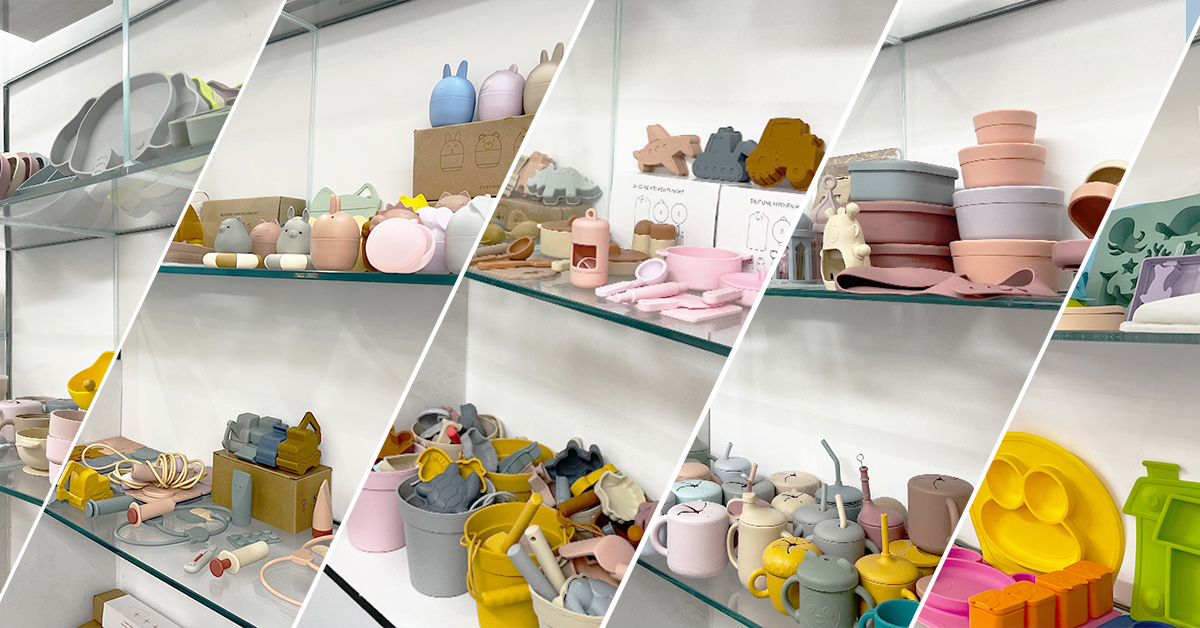
Kangde is a China-based silicone products manufacturer providing OEM and ODM manufacturing services for international B2B customers.
With 23 years of manufacturing experience, Kangde supports customers throughout the product development process, from design and mold development to sampling, mass production, branding, and packaging.
Our manufacturing capabilities include:
25+ automated compression molding production lines.
A dedicated R&D team with experienced product designers.
One-stop OEM and ODM customization services.
Food-grade silicone product manufacturing.
Quality management systems certified to ISO 9001 and ISO 14001.
A 12-step quality inspection process.
Product development and production support for kitchenware, baby products, pet supplies, household products, and other customized silicone items.
We work with importers, distributors, wholesalers, and brands looking for reliable custom silicone product manufacturing in China.
Whether you need to develop a new product from an idea or manufacture an existing design in bulk, our team can help evaluate your requirements and provide a suitable production quotation.
Looking for a custom silicone product manufacturer?
Visit Kangde Silicone to explore our manufacturing capabilities or contact our team at sales@kangdesilicone.com for an OEM/ODM quotation.
There is no standard price. The cost depends on the product design, mold investment, material, production quantity, customization, and packaging. A simple product may require a relatively small mold investment, while complex products can require significantly more expensive tooling.
Simple production molds may cost around $1,000–$5,000, while complex multi-cavity molds can cost $5,000–$20,000 or more. LSR injection molds may require an even higher investment. The actual quotation depends on the product structure and production requirements.
MOQ varies by product design, mold structure, material, color, and manufacturing process. Some projects can start with smaller trial orders, while standard bulk production may require higher quantities. Ask the manufacturer to confirm the MOQ for your specific product.
Not necessarily. Silicone manufacturing can be cost-effective when the design, mold, and production quantity are planned properly. The initial mold investment may seem high, but it can be distributed across multiple production orders.
Yes. Most experienced OEM/ODM silicone manufacturers can offer custom colors, embossed or debossed logos, printing, product structures, and packaging. The available options depend on the product design and production method.
The timeline depends on mold complexity, sample approval, material preparation, and order quantity. A typical project includes design confirmation, mold development, sample testing, and mass production. Ask the factory for a project-specific schedule before placing your order.
Yes. You can send a reference picture, existing sample, or product concept to the manufacturer. The factory can initially evaluate the design and request additional dimensions or technical details before providing a formal quotation.
Choose a suitable silicone material, simplify unnecessary design details, confirm the product structure before mold production, optimize order quantities, and work with a manufacturer that can manage mold development and mass production together.
China has an established silicone manufacturing supply chain, including material suppliers, mold-making services, and production facilities. This can provide competitive manufacturing options for overseas buyers. However, the final cost should also include quality requirements, transportation, import duties, and other applicable expenses.
Ideally, provide a product drawing or reference image, dimensions, material requirements, color, logo details, estimated order quantity, and packaging requirements. If some details are unavailable, start with your product idea and target quantity.
Final Takeaway
The cost of custom silicone product manufacturing is determined by the complete project, not just the price of silicone material or the unit manufacturing cost.
For B2B buyers, the most effective approach is to compare mold investment, unit price, production quantity, quality requirements, and delivery costs together.
A reliable silicone manufacturer should help you choose the right production method, control unnecessary development expenses, and deliver consistent quality for repeat orders.
Contact Kangde for a custom silicone manufacturing quotation and OEM/ODM support.


