
Custom silicone manufacturing usually takes about 3–8 weeks from design approval to finished production. Simple products can sometimes be completed in 2–4 weeks, while complex designs, new molds, multiple revisions, testing, or large orders may take 6–10 weeks or longer.
The exact lead time depends mainly on product complexity, mold development, sample approval, order quantity, and testing requirements.
A typical project includes several stages:
| Manufacturing Stage | Typical Time |
|---|---|
| Design review & quotation | 1–3 working days |
| Mold design & manufacturing | 10–30 days |
| First sample | 2–7 days |
| Sample adjustment & approval | 3–10 days |
| Mass production | 7–30 days |
| Inspection & packaging | 2–5 days |
These are general planning ranges. Actual lead times vary by product structure and factory capacity. Some manufacturers report simple custom products in 7–15 days, while more complex projects can require 45–60 days.
Simple products with an existing design and relatively uncomplicated mold structure can move quickly through sampling and production.
Examples include:
Silicone kitchen accessories
Simple baby products
Silicone mats
Basic molded parts
Some manufacturers report 15–25 working days for mass production after sample approval.
For a completely new product, the manufacturer normally needs to:
Review design → Make mold → Produce samples → Make revisions → Approve samples → Start mass production
New mold development alone can take around 10–30 days, depending on the complexity of the tooling.
Complex products may take longer because they can require:
Complicated mold structures
Multi-color molding
LSR injection molding
Overmolding or assembly
Multiple sample revisions
Food-contact or other compliance testing
Large production quantities
For some complex silicone products, manufacturers report lead times of 45–60 days.
The fastest way to reduce lead time is to provide the manufacturer with complete and accurate information at the beginning.
Prepare your:
2D or 3D drawings
Product dimensions
Silicone material requirements
Color/Pantone number
Logo requirements
Estimated order quantity
Packaging requirements
A clear design reduces back-and-forth communication and makes mold development and sampling more efficient.
For B2B buyers, it is also important to ask whether the quoted lead time starts from order confirmation, deposit payment, drawing approval, or mold approval. Different factories may calculate lead time differently.
| Project Type | Approx. Total Time |
|---|---|
| Simple customization | 2–4 weeks |
| Standard OEM/ODM | 3–6 weeks |
| Complex custom product | 6–10+ weeks |
| Repeated design revisions | Longer |
For international B2B buyers, do not only calculate factory production time. You should also allow additional time for shipping, customs clearance, and final delivery.
A good practice is to start development at least 1–2 months before your target selling date, and earlier for complex or high-volume projects.
Kangde Silicone is an experienced silicone products manufacturer in China, providing OEM and ODM services for global B2B buyers. From product design and mold development to sampling, mass production, quality inspection, and packaging, we offer a complete manufacturing solution under one roof. With in-house mold development and production capabilities, we help customers shorten development cycles, maintain consistent quality, and bring custom silicone products to market more efficiently.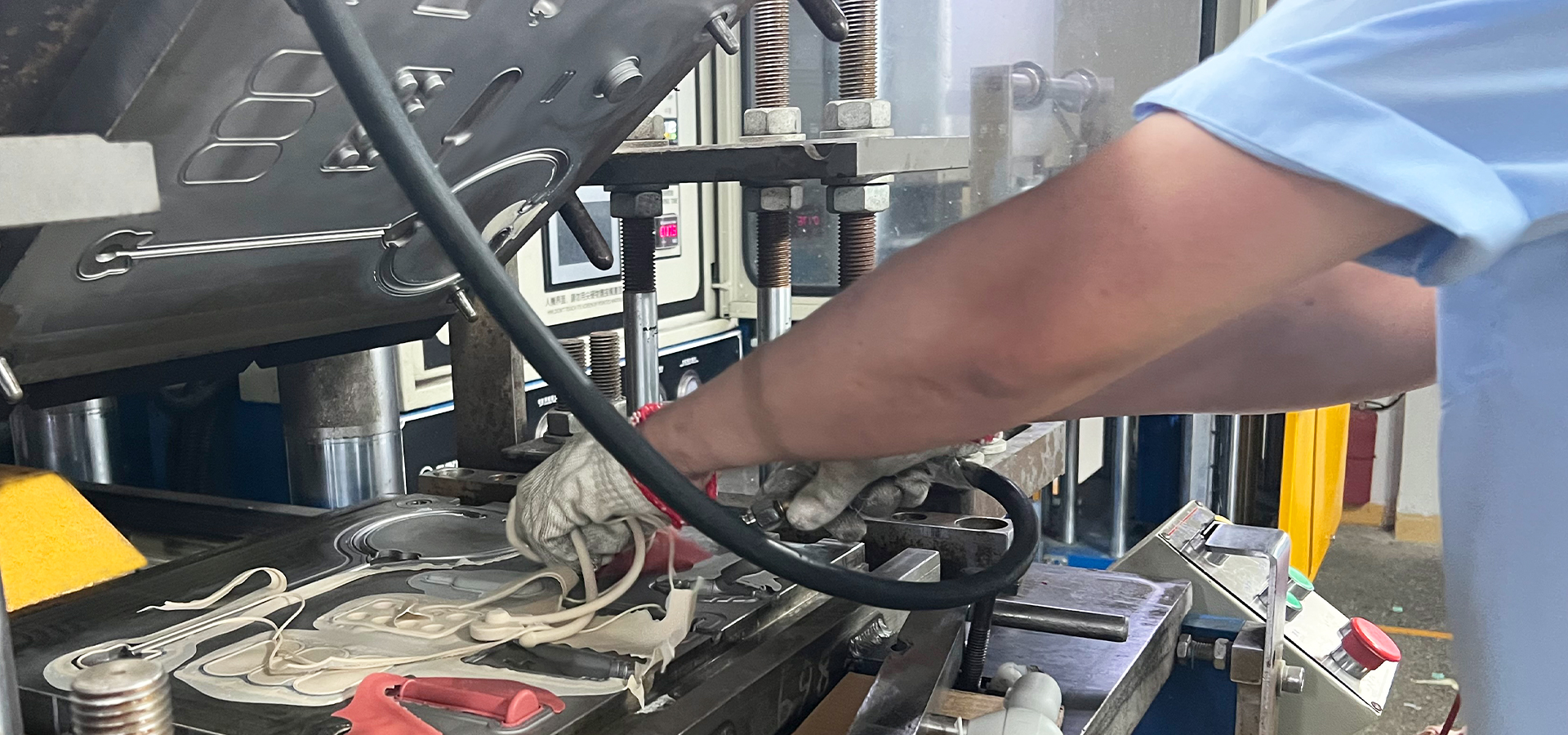
A simple mold may take around 10–20 days, while more complicated molds can take 20–40 days or longer.
Mass production commonly takes around 7–30 working days, depending on order quantity, product complexity, and factory capacity.
Yes. Faster delivery is more realistic when the design is finalized, the mold structure is simple, samples require few revisions, and the factory has available production capacity.
Not necessarily. A large order generally requires more production time, but factories with sufficient equipment and capacity can sometimes complete large orders efficiently. The production schedule should be confirmed based on the actual quantity.
Send the manufacturer your product drawing or sample, material requirements, quantity, colors, logo, and packaging requirements. A professional factory can then evaluate the project and provide a more realistic production schedule.


