Yes, silicone scrubbers really work—but they are not a magic replacement for every cleaning tool. For everyday washing, silicone scrubbers can effectively remove food residue, dirt, and light grease. Their main advantages are that they are easy to rinse, dry faster than traditional sponges, and can be more hygienic when properly cleaned and dried. Research comparing kitchen sponges and brushes found that brushes generally support lower bacterial levels and dry faster than sponges.
Silicone scrubbers usually use flexible bristles or textured surfaces to create friction against a surface. This helps loosen food particles and everyday dirt while allowing water and dish soap to wash them away.
Unlike absorbent kitchen sponges, silicone scrubbers do not hold as much water. In laboratory research, brushes dried faster than sponges, and bacteria survived less effectively on drying brush surfaces.
However, silicone itself is not automatically antibacterial. Ordinary silicone can still support microbial attachment under suitable conditions, so cleaning and drying remain important.
| Feature | Silicone Scrubber | Traditional Sponge |
|---|---|---|
| Daily dish cleaning | ✅ Good | ✅ Good |
| Removes light grease | ✅ Good | ✅ Good |
| Dries quickly | ✅ Usually | ❌ Usually slower |
| Holds water | Low | High |
| Easy to rinse | ✅ Yes | Moderate |
| Bacterial buildup risk | Generally lower when kept dry | Higher because it stays moist |
| Durability | ✅ Usually long-lasting | ❌ Often needs frequent replacement |
| Tough baked-on food | Moderate | Good with abrasive type |
A 2022 study of used kitchen cleaning tools found that sponges could contain substantially higher bacterial levels than brushes, while drying was associated with faster bacterial reduction on brushes. 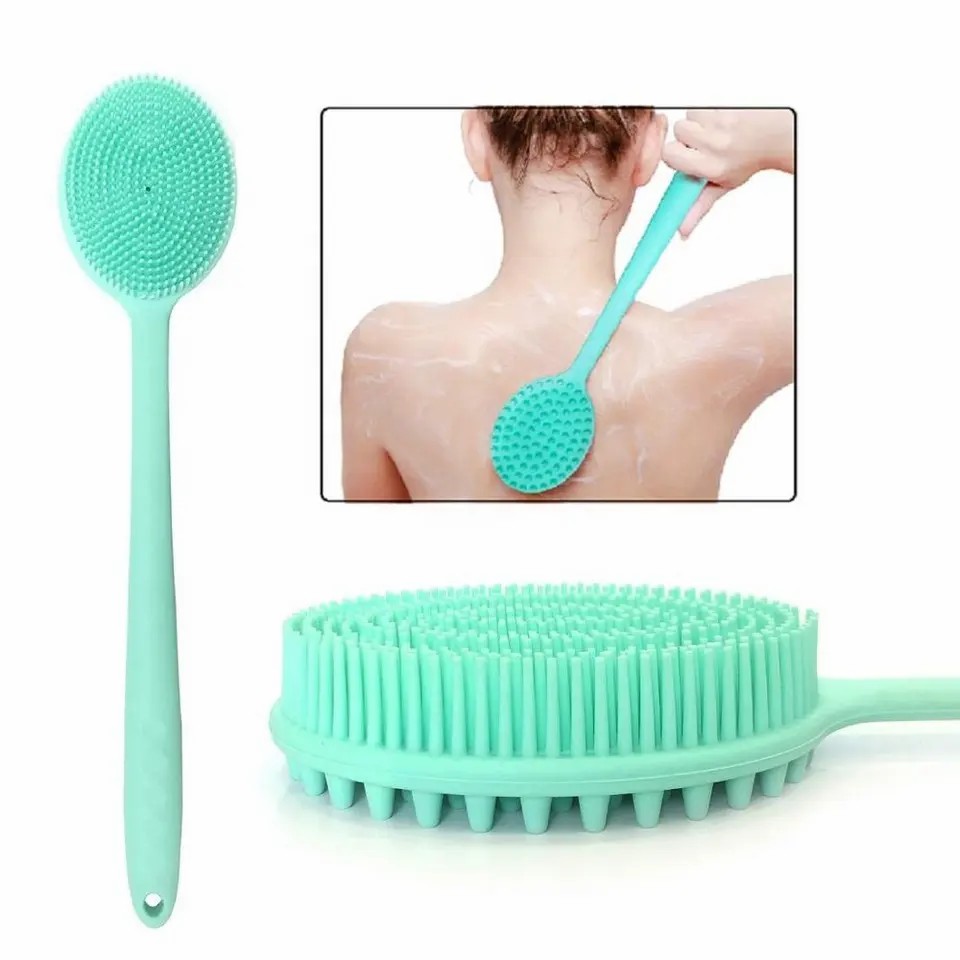
Silicone scrubbers are particularly useful for:
Dishes, bowls, cups, and cookware
Baby bottles and feeding items, when the scrubber is appropriately designed
Kitchen sinks and countertops
Bathroom surfaces
Gentle cleaning of non-stick cookware, depending on the surface and manufacturer instructions
They are less suitable for extremely hard, burnt-on deposits where a stronger abrasive pad or specialized scraper may work better.
A silicone scrubber works best when combined with warm water and dish soap. Use enough pressure to loosen the residue, then rinse the scrubber thoroughly and let it air-dry completely.
For kitchen hygiene, extra care is important after cleaning raw meat or poultry residue. Research shows that contaminated cleaning tools should be properly cleaned or replaced rather than reused without sanitation.
For many everyday cleaning tasks, they can be a more hygienic and convenient option, particularly because they dry quickly and are easier to rinse. But “better” depends on the job. Sponges can still be useful for absorbing spills and tackling certain stubborn residues.
The key advantage of a silicone scrubber is not that silicone magically kills bacteria. It is the combination of flexible scrubbing action, low water retention, easy cleaning, and fast drying.
Do silicone scrubbers really work? Yes. They are effective for routine cleaning and can be a practical alternative to traditional sponges. Their biggest benefits are easy maintenance, durability, and better drying characteristics. Just remember: a silicone scrubber still needs to be washed and dried regularly—it is not inherently antibacterial.
For daily dishwashing, they can be. Studies have found that brushes generally dry faster and harbor fewer bacteria than sponges.
Not necessarily. Standard silicone should not be marketed as antibacterial unless the finished product has been specifically tested and certified for that claim.
A quality silicone scrubber can generally last much longer than a traditional sponge, although actual lifespan depends on the material, design, frequency of use, and cleaning conditions.
Food-grade silicone scrubbers designed for kitchen use are commonly used for washing dishes and cookware. Always follow the product manufacturer's care and temperature instructions.
Not always. They are excellent for routine scrubbing, but an absorbent sponge or stronger abrasive tool may still be useful for particular cleaning jobs.


