Choosing between compression molding and LSR injection molding depends mainly on your product design, order volume, required precision, and tooling budget. In general, compression molding is more cost-effective for low-to-medium volumes, larger or thicker silicone parts, and projects with a limited tooling budget. LSR injection molding is better for high-volume production, complex designs, tight tolerances, thin walls, and highly automated manufacturing.
For B2B buyers, the cheapest mold is not always the cheapest overall solution. The right process should be selected based on total cost per part, expected annual volume, product complexity, and production efficiency.
Compression molding uses solid silicone rubber, usually HCR (High Consistency Rubber). The silicone material is prepared into preforms, placed into a heated mold, and then compressed under pressure until it cures.
It is a relatively simple and flexible manufacturing method and generally requires lower tooling investment than LSR injection molding.
Compression molding is commonly used for:
Silicone kitchenware
Baby products
Gaskets and seals
Silicone mats
Large or thick silicone parts
Low- to medium-volume customized products
The main disadvantages are longer cycle times, more manual handling, and more flash that may require trimming.
LSR (Liquid Silicone Rubber) injection molding uses a two-component liquid silicone system. The A and B components are precisely metered, mixed, and injected into a heated mold, where the silicone cures rapidly.
Because the process can be highly automated, LSR injection molding is particularly suitable for large production runs and high-precision silicone components. Industrial LSR systems can produce anything from thousands to millions of parts, depending on the application and tooling configuration.
Typical applications include:
Medical components
Baby products
Silicone seals
Valves and membranes
Wearables
Electronic components
Complex multi-cavity silicone parts
| Feature | Compression Molding | LSR Injection Molding |
|---|---|---|
| Silicone Material | Solid HCR | Liquid LSR |
| Tooling Cost | Lower | Higher |
| Cycle Time | Generally longer | Generally shorter |
| Automation | Low–Medium | High |
| Production Volume | Low–Medium | Medium–High |
| Precision | Good | Very high |
| Complex Geometry | Good | Excellent |
| Thin-Wall Parts | More difficult | Better suited |
| Flash | More likely | Minimal with good tooling |
| Labor Cost | Higher | Lower |
| Best For | Simple, thick or larger parts | Complex, precise, high-volume parts |
Industry references commonly report compression molding cycles in the minutes range, while LSR injection molding can often achieve cycles measured in seconds to around 1–2 minutes, depending heavily on product thickness, mold design, and curing conditions.
There is no universal winner.
Your project has a relatively small or moderate production volume, the product is relatively simple, or keeping the initial mold investment low is important.
For example, a buyer ordering several thousand silicone kitchen products may prefer compression molding because the lower tooling investment can outweigh the higher labor and cycle-time costs.
Your annual demand is high and you need consistent dimensions, rapid production, complex geometry, thin sections, or extensive automation.
Although LSR molds and equipment generally require a higher initial investment, the lower labor content and faster production can reduce the cost per part as volume increases.
A practical way to think about the decision is:
Low volume + simple design + lower tooling budget → Compression Molding
High volume + complex design + high precision + automation → LSR Injection Molding
However, volume alone should not determine the process. Part geometry is equally important. A high-volume product with thick walls may still work well with compression molding, while a lower-volume product with extremely complex features may justify LSR injection molding.
For purchasing teams, it is better to ask silicone manufacturers for a total-cost comparison, including tooling, unit price, labor, expected scrap, and production capacity—not simply the mold quotation.
Before choosing a process, provide your manufacturer with:
Product dimensions + 3D drawing + material/durometer + estimated order quantity + application + required certifications.
An experienced silicone manufacturer can then recommend the most economical production method instead of automatically choosing the more advanced process.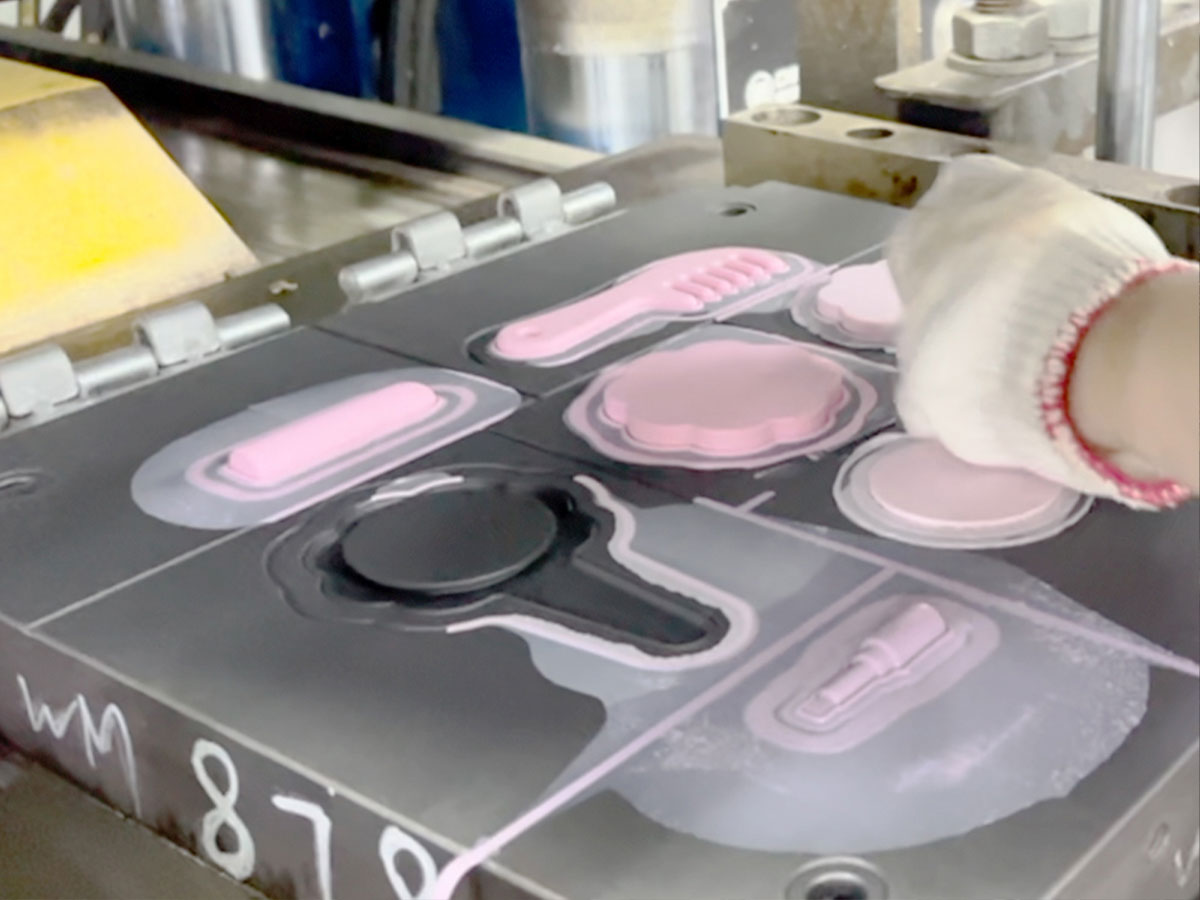
Is LSR injection molding better than compression molding?
Not always. LSR is better for high-volume, high-precision, and complex silicone products, while compression molding is often more economical for simpler or lower-volume products.
Is LSR molding more expensive?
Usually, the initial tooling and equipment investment is higher. However, faster cycles and automation can make LSR more economical at larger production volumes.
Which process is better for baby silicone products?
Both can be suitable. The more important factors are the silicone material, product design, manufacturing controls, and required food-contact or safety testing.
Which process is better for low MOQ orders?
Compression molding is often a better starting point because the tooling investment is generally lower.
Can one silicone product be manufactured using both methods?
Yes. Depending on the design and production volume, both processes may be technically possible. The best choice should be based on cost, geometry, quality requirements, and expected demand.
Compression molding and LSR injection molding are not competitors with one universal winner—they are optimized for different manufacturing needs. Compression molding offers lower tooling investment and flexibility, while LSR injection molding provides faster cycles, higher automation, excellent repeatability, and better performance for complex high-volume parts.
For B2B buyers, the best question is not “Which process is better?” but rather:
“Which process gives my product the lowest total cost while meeting the required quality and production volume?”


