Silicone product MOQ (Minimum Order Quantity) is not a fixed industry standard. For custom silicone products, MOQ commonly falls anywhere from around 100 to 1,000+ pieces, depending on the product design, mold cost, silicone material, customization, packaging, and production process. Some manufacturers advertise 100–300-piece starting quantities, while others set 500–1,000 pieces or more for custom production.
For buyers, the lowest MOQ is not always the best deal. The better question is: What MOQ gives you the right balance of unit cost, inventory risk, and product quality?
MOQ means the minimum number of units a manufacturer requires you to order.
For example, if a factory quotes:
MOQ: 500 pcs per SKU
you normally need to order at least 500 units of that specific product or SKU.
MOQ is mainly used to cover fixed production costs such as:
Mold and tooling setup
Machine setup and production changeover
Raw silicone material
Color matching
Logo printing or embossing
Packaging
Quality inspection and testing
Because these costs do not decrease proportionally with order quantity, very small orders can have a much higher unit price.
There is no universal MOQ, but current manufacturer examples show a broad range:
| Order Type | Possible MOQ Range | Best For |
|---|---|---|
| Existing/ready-made product | 100–500 pcs | Small retailers, testing |
| Simple custom product | 300–1,000 pcs | Small brands |
| New custom mold | 500–1,000+ pcs | OEM/ODM projects |
| Complex silicone product | 1,000–3,000+ pcs | Established brands |
| Large-scale production | 5,000+ pcs | Distributors and major retailers |
These are general market examples, not fixed industry rules. Some manufacturers accept smaller pilot orders, while others require higher quantities to make tooling and production economically viable.
Simple products generally require less production time. Complex designs with multiple components, undercuts, thin walls, or tight tolerances may require more expensive tooling and higher production quantities.
Custom silicone products usually require a production mold. The cost of the mold is largely independent of whether you initially order 200 or 2,000 pieces.
That is why a factory may accept a small order but charge a higher unit price.
Food-grade, medical-grade, flame-retardant, or other specialized silicone materials can have different sourcing and testing requirements.
Custom colors, logos, printing, packaging, assembly, and other secondary processes can increase the practical MOQ.
Compression molding, liquid silicone rubber (LSR) injection molding, and other processes have different tooling and production economics. This means two factories can quote very different MOQs for the same product.
Not necessarily.
A lower MOQ can reduce your inventory risk, but it may also mean a higher unit price.
For example:
| Option | Order Quantity | Unit Cost | Inventory Risk |
|---|---|---|---|
| Small batch | 200 pcs | Higher | Low |
| Standard batch | 500 pcs | Medium | Medium |
| Larger batch | 1,000+ pcs | Lower | Higher |
For a new product or market test, a lower MOQ can make sense.
For a proven product with predictable sales, ordering more units may reduce your total landed cost.
Instead of simply asking, “Can you reduce the MOQ?”, give the manufacturer more flexibility.
You can ask about:
Using an existing mold: This can significantly reduce tooling investment.
Combining colors: Some factories may allow multiple colors while maintaining a total quantity target.
Simplifying packaging: Custom retail packaging can create additional MOQ requirements.
Starting with a pilot order: A small first order can be used to test customer demand before scaling.
Sharing your annual forecast: If you expect 10,000 pieces annually, tell the manufacturer. A factory may be more willing to support a smaller first order when there is a clear long-term production plan.
Before placing an order, ask these questions:
What is the MOQ per SKU?
Is the MOQ different for different colors?
Does the MOQ include packaging?
Is a new mold required?
Can I place a smaller pilot order?
Will the unit price decrease at 500, 1,000, or 5,000 pieces?
Are testing and certification costs included?
What happens to the tooling cost if I reorder?
This helps you compare suppliers based on total project cost, rather than simply choosing the supplier with the lowest MOQ.
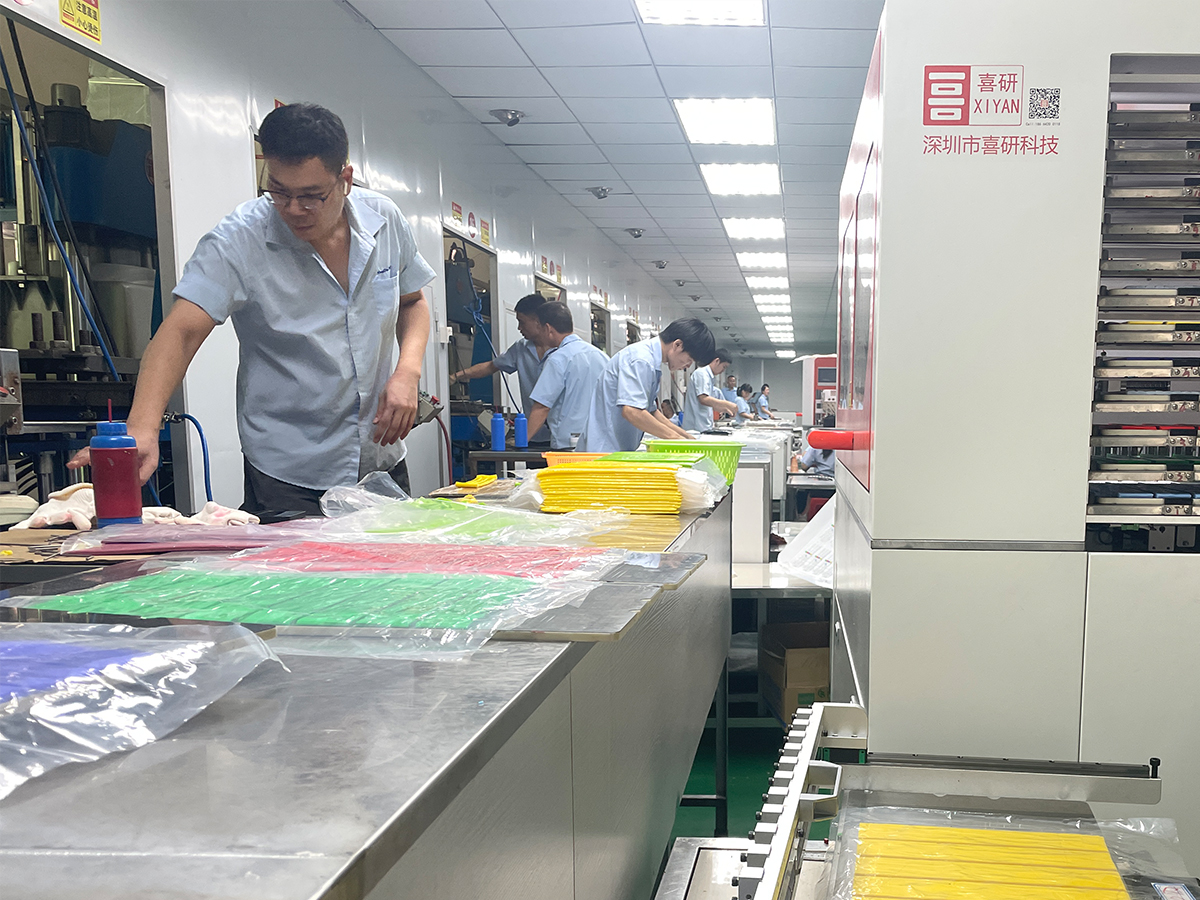
Kangde Silicone provides OEM and ODM silicone manufacturing for brands, wholesalers, importers, and distributors. The company supports custom product development from design and mold development to mass production, helping buyers choose an order quantity based on their product, budget, and market demand.
For buyers launching a new silicone product, a flexible MOQ can make it easier to test the market first and scale production later.
The best silicone product MOQ is not necessarily the lowest MOQ. A good MOQ should match your expected sales, available budget, tooling investment, and inventory risk.
For most buyers, the smartest approach is to start with a practical pilot quantity, confirm product quality and market demand, and then increase order volume to obtain better unit pricing.
There is no universal standard. Current manufacturer examples range from around 100 to 1,000+ pieces, depending on the product and customization requirements.
Sometimes, yes. Some manufacturers support 100-piece orders, especially for selected products or small-batch projects. However, a new custom mold may require a higher MOQ or a higher unit price.
MOQ helps manufacturers recover fixed costs such as tooling, machine setup, raw materials, testing, and packaging.
No. A lower MOQ usually means higher unit costs because fixed production costs are spread across fewer pieces.
Yes. You can discuss a pilot order, existing molds, simplified packaging, combined quantities, or a larger long-term purchasing plan.


