Bottom Line Up Front :
Bath toys become appropriate around 6 months of age, when infants can sit up without support and actively reach out to explore. However, simple sensory water items can be introduced during supervised baths as early as 0–6 months. By 12+ months, interactive pouring, stacking, and mold-free silicone toys are essential for fine motor and cognitive development.
Industry data shows that over 70% of modern parents actively search for "mold-free" and "easy-to-clean" bath items. Whether you are a parent looking for safe daily essentials or a commercial buyer sourcing high-demand inventory, matching toys to specific developmental milestones is key to safety and satisfaction.
Focus: Visual tracking, soft tactile exposure, and keeping baby calm in warm water.
Best Choice: Ultra-soft silicone washcloths, soft water-prep sponges, and simple floating rings.
Safety Tip: Avoid small detachable parts or firm plastic edges. Babies at this age explore primarily with their eyes and sensitive skin.
Focus: Hand-eye coordination, cause-and-effect, and tactile exploration.
Best Choice: Hole-free floating animals, soft silicone cups, and easy-to-grab floating boats.
Safety Tip: Choose holeless designs. Traditional squeaky toys with tiny water holes trap moisture internally, creating hidden black mold within weeks.
Focus: Fine motor control, pouring, scooping, and spatial awareness.
Best Choice: Stacking cups with drain holes, water wheels, suction-cup wall toys, and soft silicone bath buckets.
Safety Tip: Look for durable, drop-resistant items made from 100% food-grade silicone or high-impact BPA-free materials.
Focus: Creative storytelling, construction, and basic physics (buoyancy, water flow).
Best Choice: Connectable pipe mazes, bath alphabet letters, floating puzzles, and interactive water cascades.
Safety Tip: Ensure non-staining, easily rinseable designs that dry quickly to prevent soap scum buildup.
| Age Group | Recommended Bath Toys | Developmental Benefits | Key Safety & Material Features |
| 0–6 Months | Soft silicone teethers, bath sponges, simple floating rings | Visual stimulation, gentle tactile comfort | 100% BPA-free, ultra-soft, zero small parts |
| 6–12 Months | Hole-free silicone floats, stacking cups, soft scoops | Hand-eye coordination, grasp-and-release | Mold-resistant (sealed design), food-grade silicone |
| 1–3 Years | Water wheels, suction cups, pour-and-strain buckets | Fine motor skills, cause-and-effect learning | Durable, non-toxic, dishwasher-safe |
| 3+ Years | Pipe build-sets, floating puzzles, bath foam letters | Creativity, spatial logic, sensory play | Smooth edges, non-staining, safety-certified |
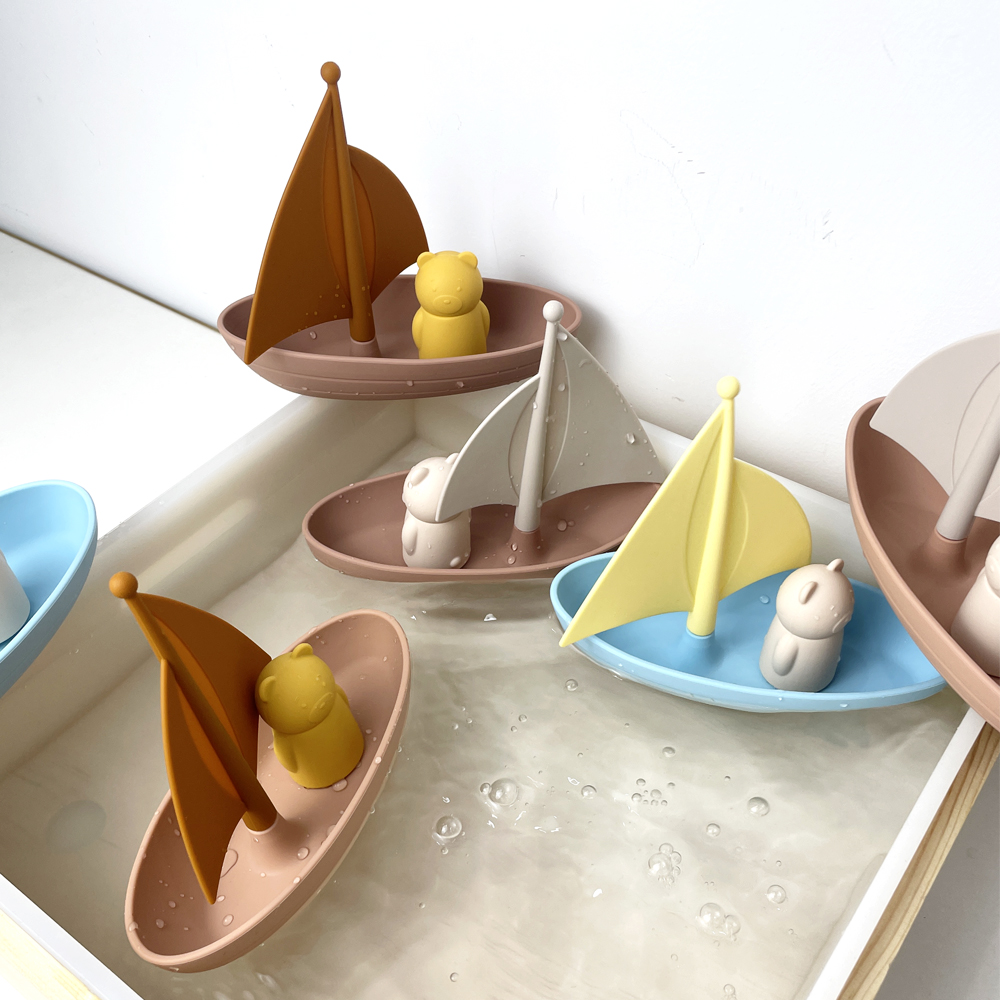
Both retail consumers and volume procurement managers prioritize three core standards when evaluating bath products:
Mold-Free Architecture: Avoid toys with internal hollow spaces that cannot be dried. Open-top silicone cups or fully sealed, holeless designs are the current gold standard in consumer safety.
Food-Grade & Non-Toxic Materials: Look for 100% Food-Grade Silicone or BPA-Free/Phthalate-Free plastics. Silicone is naturally resistant to bacteria, hypoallergenic, and withstands high-temperature boiling or dishwasher cleaning.
Easy Maintenance: Toys that dry quickly reduce replacement costs for parents and minimize product return rates for retailers and brands.
Yes, provided they are simple, soft, and designed for gentle sensory exposure. Avoid rigid items or toys with small components. Simple silicone wash tools or soft floating rings are ideal for early water introduction.
Toys with small squirt holes pull bathwater inside, which rarely dries completely. Dark, damp interiors create an ideal environment for mold and bacteria growth. Hole-free or fully detachable silicone designs prevent hidden mold entirely.
Food-grade silicone bath toys can be washed in warm soapy water, placed on the top rack of a dishwasher, or sanitized in boiling water for 2–3 minutes without warping or releasing harmful chemicals.
Multi-functional silicone bath sets—such as stackable, pourable, and mold-resistant suction toys—command high consumer demand, excellent customer reviews, and low return rates due to their durability and ease of cleaning.


