Safe choice: A comprehensive analysis of the safest baby teether toys to protect the baby's critical period of chewing
During the teething period, the baby's gums are swollen and irritable. A safe and effective teether toy is a must-have to relieve discomfort. However, facing the dazzling array of products on the market, how to avoid "toxic" and "dangerous" hidden dangers and choose truly safe teething tools? This article combines pediatric recommendations, safety standards and real evaluations to sort out the core elements and authoritative recommendation list of safe teethers for you.
✅ Material safety:
The teether directly contacts the baby's mouth, and the material is the first line of defense for safety. Be sure to identify the following core certifications and features:
Food-grade silicone:
Safety: Currently recognized as the safest teether material, non-toxic and odorless, chemically stable, and not easy to breed bacteria.
Features: soft and elastic, can massage gums; resistant to high and low temperatures (usually -50°C to 230°C), can be boiled, steamed or refrigerated for sterilization, not easy to deform and age, and has a variety of styles.
Strictly eliminate harmful substances:
BPA/BPS Free: Bisphenol substances interfere with endocrine and must be clearly marked as not containing.
No phthalates: commonly found in low-quality plastics, affecting development.
No formaldehyde, no volatile organic compounds: low-quality plastics or coatings are easily released, damaging nerves.
Beware of "invisible killers": avoid toys containing liquid/gel fillings (may leak and breed bacteria), borax (such as "Slime" crystal mud, which can be poisonous if ingested), or magnetic beads (intestinal perforation if swallowed by mistake).
Certification marks are a guarantee:
In the Chinese market, look for the "CCC" compulsory product certification mark (for plastic, electrical, metal, and ride-on toys).
International brands can refer to standards such as FDA, EU EN71, and ASTM F963.
✅ Design safety: reasonable structure to avoid physical risks
Even if the material is up to standard, design defects may bring hidden dangers such as suffocation and scratches. Safety design must meet the following requirements:
No small parts that are easy to fall off:
Ensure that the one-piece molding or parts are firm to avoid suffocation caused by biting and swallowing.
Counterexample: Toys that expand when water is absorbed and magnetic beads, which are small and dangerous, should be kept away from infants and young children.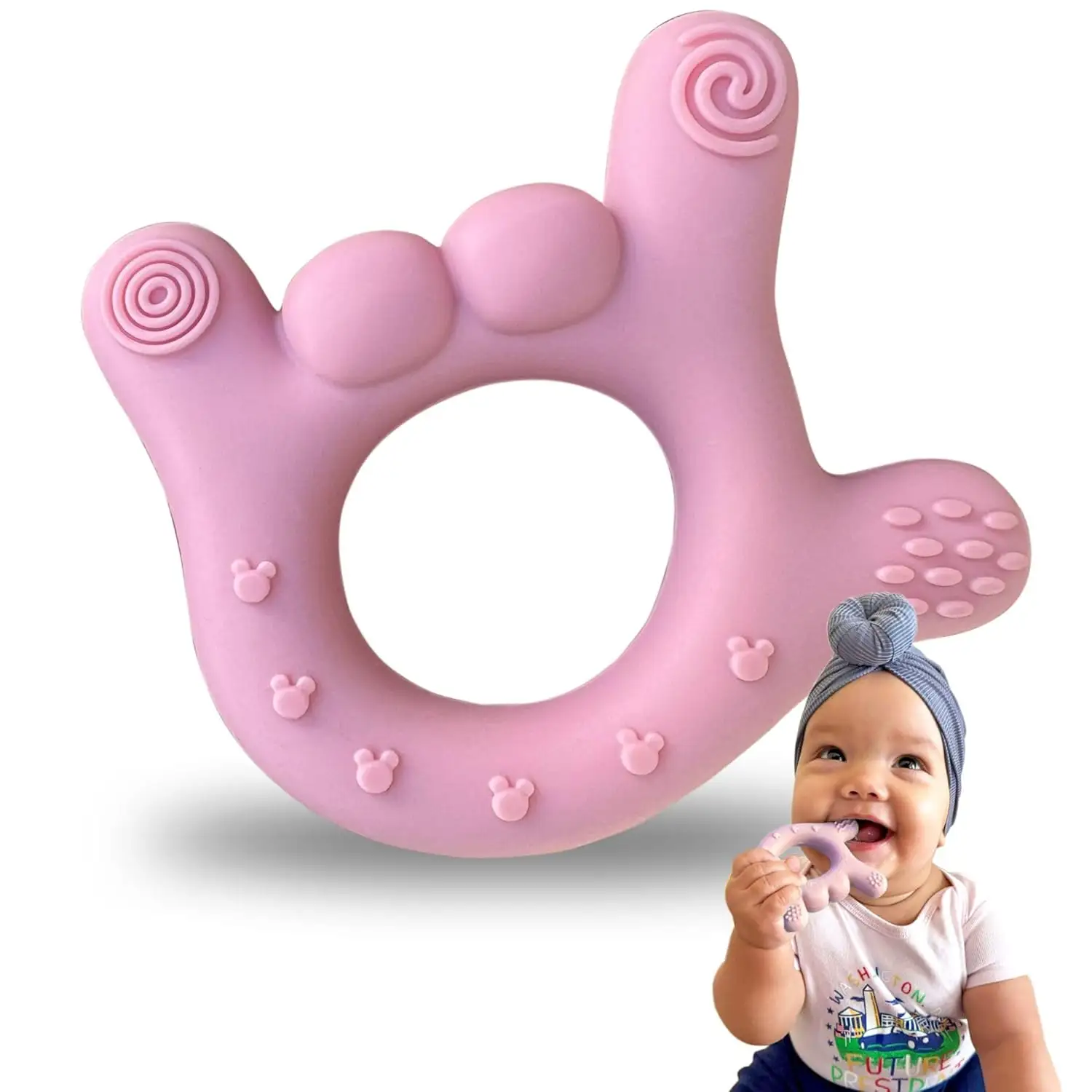
Scientific and reasonable size and shape:
Easy to grasp: ring and handle design suitable for baby's small hands.
Anti-deepthroat: large enough (usually > 3cm x 3cm) to avoid swallowing the whole thing.
Smooth surface without sharp corners: rounded edges and no burrs to avoid scratching the mouth or skin.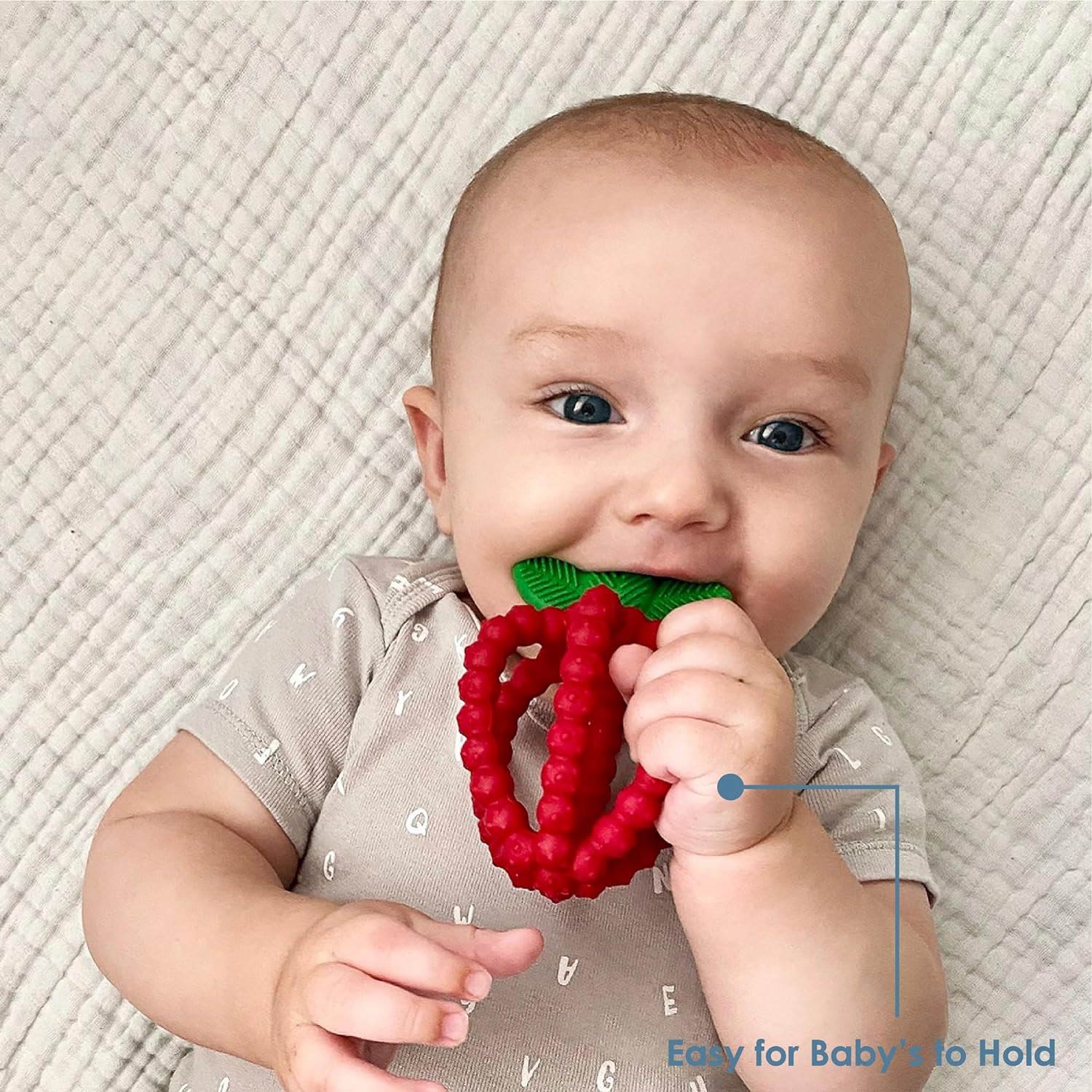
Moderate texture stimulation:
Surfaces with multiple textures (such as bumps and wavy patterns) can effectively massage the gums.
The texture should not be too sharp or rough.
✅ Functional safety: correct use and cleaning are the key.
No matter how safe the teether is, it can become a source of hidden danger if it is used incorrectly or neglected.
Cooling methods should be scientific:
It can be refrigerated (4°C), but not frozen (-18°C): Refrigeration provides a cool feeling to relieve swelling; freezing will harden the silicone and may damage the gum tissue or teeth when biting.
Clean and disinfection must be thorough & Drying:
Method: Boil in boiling water for 5 minutes, steam sterilize, or wash in a dishwasher (see product instructions). You can wipe it with diluted bleach regularly and rinse it thoroughly.
Drying is the core of mildew prevention: be sure to dry it thoroughly after washing! Residual moisture is prone to mold growth, and a humid environment is the main reason. Silicone teethers are not easy to penetrate water, but you need to pay attention to the interface.
Do not share/pass down: Avoid using old teethers used by other children, and replace aging and damaged products in time.
Use scenarios and supervision:
Do not tie the rope around the neck: Absolutely avoid hanging the teether around the baby's neck with a rope, there is a risk of entanglement and suffocation. You can use a short safety rope/clip to fix it on clothing.
Age adaptation: Use strictly according to the recommended age.
Supervision is essential: When young babies use it, parents need to observe the whole process and put it away in time after playing.
✅ Safety purchase and emergency points
Purchasing tips: "Look at the material (silicone is preferred), check the certification (CCC is the bottom line), feel the hand (smooth without sharp corners), smell the smell (discard it if it is pungent), check the age (match the age in months)".
Be wary of "three no" and Internet celebrity toxic toys: such as borax crystal mud, "pinching" with excessive plasticizers, and inferior plastics (formaldehyde/VOCs release).
✅ Emergency treatment:
Swallowed foreign objects: See a doctor immediately! Do not induce vomiting, and provide information about items that may be swallowed by mistake .
Exposure to toxic substances/allergic reactions (rash, difficulty breathing, vomiting): Stop using the product, seek medical attention immediately, and carry suspicious toys.


