Choosing food-grade silicone for baby products is not simply about looking for a “BPA-free” or “food-grade” label. The safest approach is to choose a silicone formulation specifically designed for the intended food-contact or oral-contact use, then verify the finished product through appropriate testing and compliance documentation.
For baby bowls, plates, spoons, bibs, teethers, cups, and other silicone feeding products, buyers should evaluate material quality, regulatory compliance, product design, heat resistance, odor, and manufacturing consistency before placing an order.
Food-grade silicone is silicone formulated and processed for applications where the finished product may come into contact with food. However, the term “food-grade silicone” alone is not a universal certification.
In the United States, FDA food-contact requirements apply according to the specific substance, application, and conditions of use. FDA maintains databases covering substances authorized for food-contact applications, including provisions under 21 CFR.
In Europe, food-contact materials must comply with the general requirements of Regulation (EC) No. 1935/2004. Materials should not transfer substances into food at levels that could endanger health or cause unacceptable changes to food.
For silicone specifically, the German BfR Recommendation XV provides material-specific guidance for silicone food-contact applications. BfR states that its recommendations are not legal standards, but they represent the current state of science and technology for assessing food-contact materials where specific regulations may not exist.
For baby products, ask your manufacturer what type of silicone is being used and whether the formulation is suitable for the intended application.
A quality supplier should be able to provide material specifications, test reports, or compliance documentation, rather than relying only on marketing claims such as “100% silicone” or “non-toxic.”
The product should be tested according to the target market and intended use.
| Market | What Buyers Should Check |
|---|---|
| USA | Applicable FDA food-contact requirements and product-specific children's product requirements |
| EU | Regulation (EC) No. 1935/2004 and applicable national/material-specific requirements |
| Germany / EU buyers | BfR Recommendation XV can be an important reference for silicone |
| Other markets | Check the destination country's food-contact and children's-product regulations |
An important point for B2B buyers: food-contact compliance and children's product compliance are not always the same thing.
For example, in the United States, children's products subject to applicable safety rules generally require third-party testing by a CPSC-accepted laboratory and a Children's Product Certificate (CPC).
Baby silicone products may be exposed to hot food, boiling water, dishwashers, sterilization, refrigerators, or freezers.
Therefore, do not choose silicone based only on its appearance or softness. Ask the manufacturer for the recommended operating temperature range and cleaning instructions for the finished product.
The actual performance also depends on product thickness, design, curing process, pigments, and other components.
High-quality silicone baby products should have a clean, consistent surface and should not have a strong chemical smell.
During sourcing, inspect samples for:
Strong or persistent odor
Sticky or oily surface
Uneven color
Visible bubbles or defects
Flashing around edges
Poorly finished seams
These details are especially important for teethers, spoons, straws, and other products that may contact a baby's mouth.
A good silicone material can still result in a poor product if manufacturing controls are weak.
B2B buyers should ask suppliers:
Can you provide third-party test reports?
Can you provide material documentation?
Do you control raw-material batches?
Can you keep the same formulation for mass production?
Can you support testing for my target market?
CPSC specifically warns that material substitutions and manufacturing variability can create compliance risks, making consistent production and representative testing important for children's products.
| Feature | Food-Contact Silicone | Ordinary Silicone |
|---|---|---|
| Intended use | Food or oral contact applications | General industrial or household use |
| Material control | Higher application-specific requirements | Depends on application |
| Compliance documentation | Usually more important | May not be available |
| Baby feeding products | Recommended when appropriately tested | Generally not suitable without supporting evidence |
| B2B sourcing | Requires documentation and traceability | Higher compliance risk |
Before placing a bulk order, request these documents where applicable:
1. Material specification
Confirms the silicone formulation and intended use.
2. Food-contact test reports
Should match the destination market and intended application.
3. Finished-product testing
Important because compliance can depend on the complete finished product, not just the raw silicone.
4. Children's product testing
For applicable markets such as the United States, additional children's product requirements may apply.
5. Production and quality-control information
Consistent raw materials, curing, molding, inspection, and batch control help reduce quality variation.
Before selecting a supplier, ask these six questions:
Is the silicone specifically intended for food contact?
Can the supplier provide material and test documentation?
Are tests appropriate for my target market?
Is the finished product tested, not only the raw material?
Can the factory maintain consistent material and color batches?
Can the supplier support OEM/ODM and compliance requirements?
The best food-grade silicone for baby products is not simply the silicone with the best marketing label. It is a properly formulated material, manufactured consistently, tested for its intended use, and supported by credible compliance documentation.
For B2B buyers, choosing the right manufacturer is often more important than choosing based on price alone.
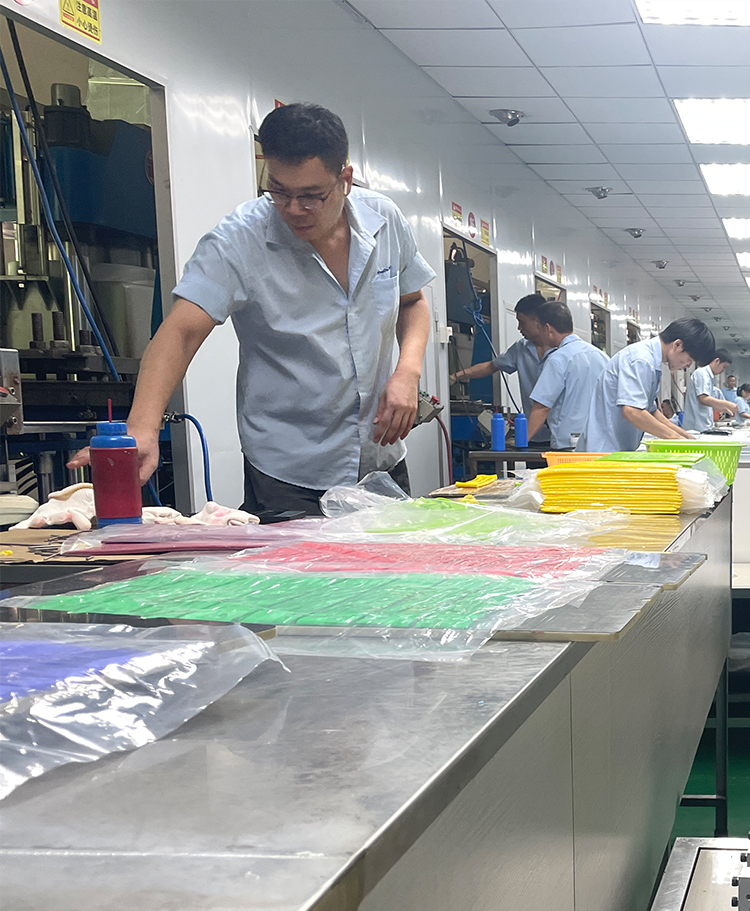
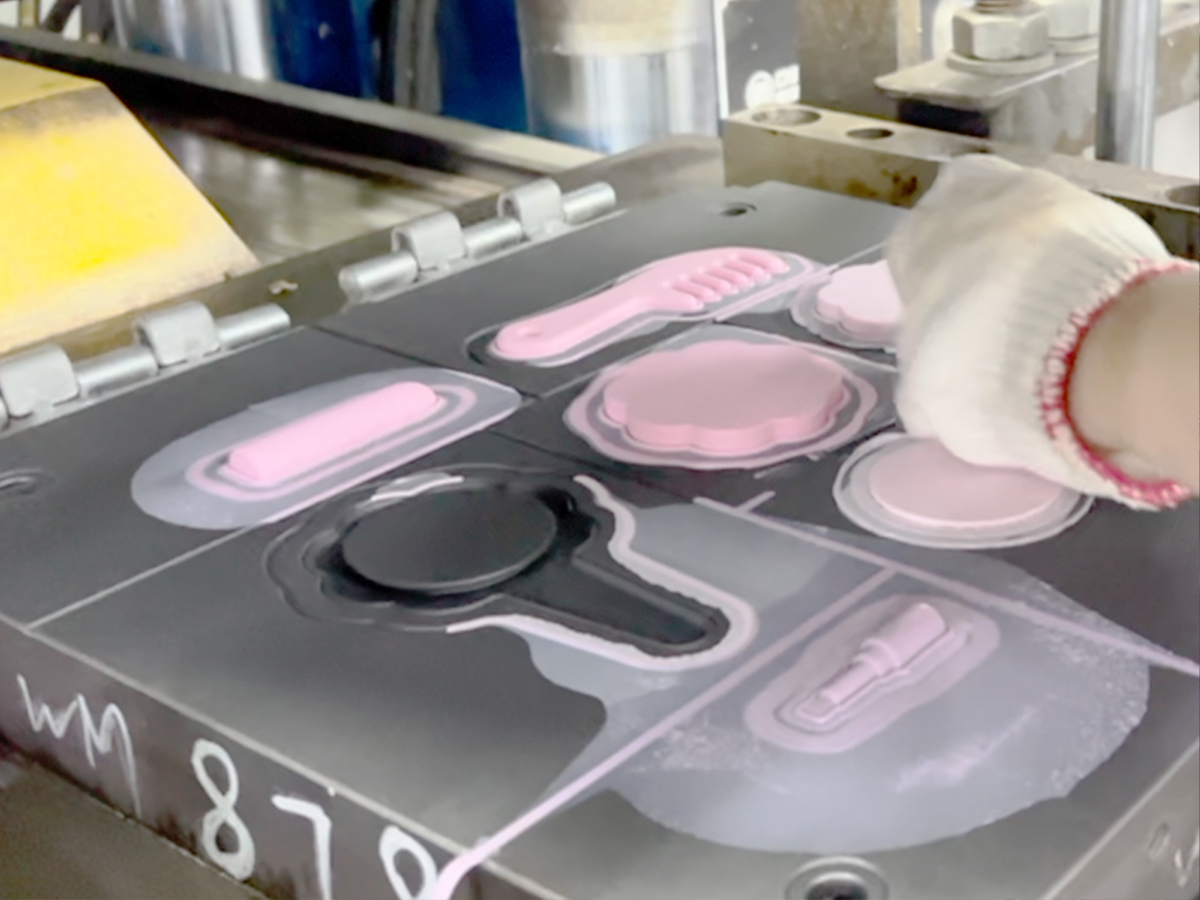
Kangde Silicone is an experienced silicone products manufacturer specializing in OEM and ODM solutions for brands, wholesalers, and distributors. We support the development and production of silicone baby and kids products, including feeding sets, teethers, educational toys, and bath products, as well as silicone kitchen and lifestyle products.
From product design, prototyping, and mold development to mass production, quality inspection, and packaging, Kangde provides a coordinated manufacturing process tailored to each customer's requirements. Our team has more than two decades of silicone manufacturing experience and supports customization of product details, colors, logos, and packaging for private-label and wholesale projects.
Looking for a reliable silicone baby product manufacturer? Share your product idea, drawing, sample, or target quantity with Kangde, and our team can help turn your concept into a production-ready silicone product.
Food-contact silicone can be suitable for baby feeding and oral-contact products when the material and finished product meet the requirements applicable to the intended use and market.
No. An FDA-related food-contact compliance claim does not automatically mean that a product meets every requirement applicable to children's products. In the U.S., additional children's product testing and certification requirements may apply.
Not necessarily. FDA and LFGB/BfR references relate to different regulatory frameworks and testing approaches. The right choice depends on the target market, product type, and intended use.
Choose a silicone formulation specifically intended for the product's oral-contact application and request appropriate testing and documentation. Product design, durability, and manufacturing quality are also important.
At minimum, ask for material information, relevant food-contact test reports, finished-product test reports, and market-specific compliance documentation. For U.S. children's products, determine whether CPC and third-party CPSC-accepted laboratory testing are required.


