The Short Answer (Conclusion): > No, 100% pure silicone does not melt into a liquid state like traditional plastics. Because silicone is a thermoset polymer (not a thermoplastic), it remains chemically stable under extreme heat. Instead of melting, if silicone is exposed to catastrophic temperatures exceeding 300°C (572°F), it undergoes thermal degradation, gradually turning brittle and decomposing into non-toxic silica ash.
For everyday consumer applications—such as kitchenware, baby products, and pet supplies—high-quality food-grade silicone is entirely heat-safe within standard operational limits.
To understand why 100% silicone resists melting, we have to look at its molecular structure. Traditional plastics (like polyethylene or polystyrene) are thermoplastics. They consist of linear polymer chains that slide past one another when heated, allowing them to melt down and re-mold repeatedly.
Silicone, however, is a thermoset polymer with a backbone made of alternating silicon and oxygen atoms (Si-O), rather than the carbon-carbon backbone found in plastics. During manufacturing, these chains undergo cross-linking, creating a permanent, three-dimensional chemical bond network.
When exposed to high temperatures, these cross-linked bonds act like a rigid web. Instead of shifting or liquefying, they hold their shape until the heat becomes high enough to break the chemical bonds entirely.
While 100% silicone won't melt, it does have strict thermal operational thresholds. Under normal conditions, food-grade and commercial finished silicone goods can easily handle both freezing cold and extreme oven heat.
Safe Operational Range: -40°C to 230°C (-40°F to 446°F)
Intermittent Heat Tolerance: Up to 260°C (500°F)
Thermal Degradation Threshold: Above 300°C (572°F)
| Material Type | Melting / Breakdown Point | Behavior Under High Heat | Best Consumer Use Cases |
| 100% Pure Silicone | 300°C (572°F) (Breakdown) | Retains shape; decomposes into white ash under direct flame. | Baking molds, baby teethers, air fryer liners, pet mats. |
| Plastic (PP - Polypropylene) | 160°C (320°F) (Melts) | Liquefies quickly; releases volatile organic compounds (VOCs). | Food containers, bottle caps. |
| Plastic (PET) | 250°C (482°F) (Melts) | Deforms and liquefies; completely loses structural integrity. | Water bottles, food trays. |
| Rubber (Natural) | 180°C (356°F) (Degrades) | Softens, becomes sticky, and undergoes rapid structural failure. | Heavy-duty tires, footwear. |
If you accidentally leave a pure silicone baking mat or kitchen utensil under a direct broiler or flame, it won't turn into a puddle of plastic goo. Instead, you will observe two distinct phases of thermal degradation:
Hardening and Loss of Elasticity: Continuous exposure to temperatures over 250°C (482°F) causes the silicone to lose its flexible, rubbery texture. It becomes brittle and prone to cracking.
Decomposition (Ashing): If exposed to an open flame or temperatures approaching 400°C (752°F), the silicon-oxygen backbone splits. The material turns into a fine, white, non-toxic powder known as silicon dioxide (silica) ash.
Safety Note: True 100% silicone is inherently BPA-free and non-toxic. Unlike melting plastics, decomposing silicone does not release hazardous fumes like dioxins or heavy chemical smoke.
Because silicone handles rapid temperature fluctuations without warping or degrading, it has become the gold standard for high-durability finished consumer goods:
Kitchenware & Baking Tools: Silicone muffin cups, baking mats, and spatulas can go straight from the freezer to a 220°C (428°F) oven without releasing chemical fillers into your food.
Baby Products: High-purity, food-grade silicone is widely used for infant spoons, suction plates, and teething toys because it can be boiled repeatedly for sterilization without degrading.
Pet Supplies: Heavy-duty silicone pet food mats and collapsible travel bowls resist cracking and tearing, remaining stable even when exposed to direct summer sunlight or washed in high-heat dishwashers.
Some low-cost products are manufactured with cheap plastic fillers. These fillers will melt and can leach toxins into your food or environment. To verify your product is 100% pure silicone, use the Pinch Test:
The Test: Take a piece of the silicone product and pinch or twist it sharply.
The Result: If the bent section turns white, the product contains plastic chemical fillers. If the material retains its color completely throughout the twist, it is 100% pure silicone.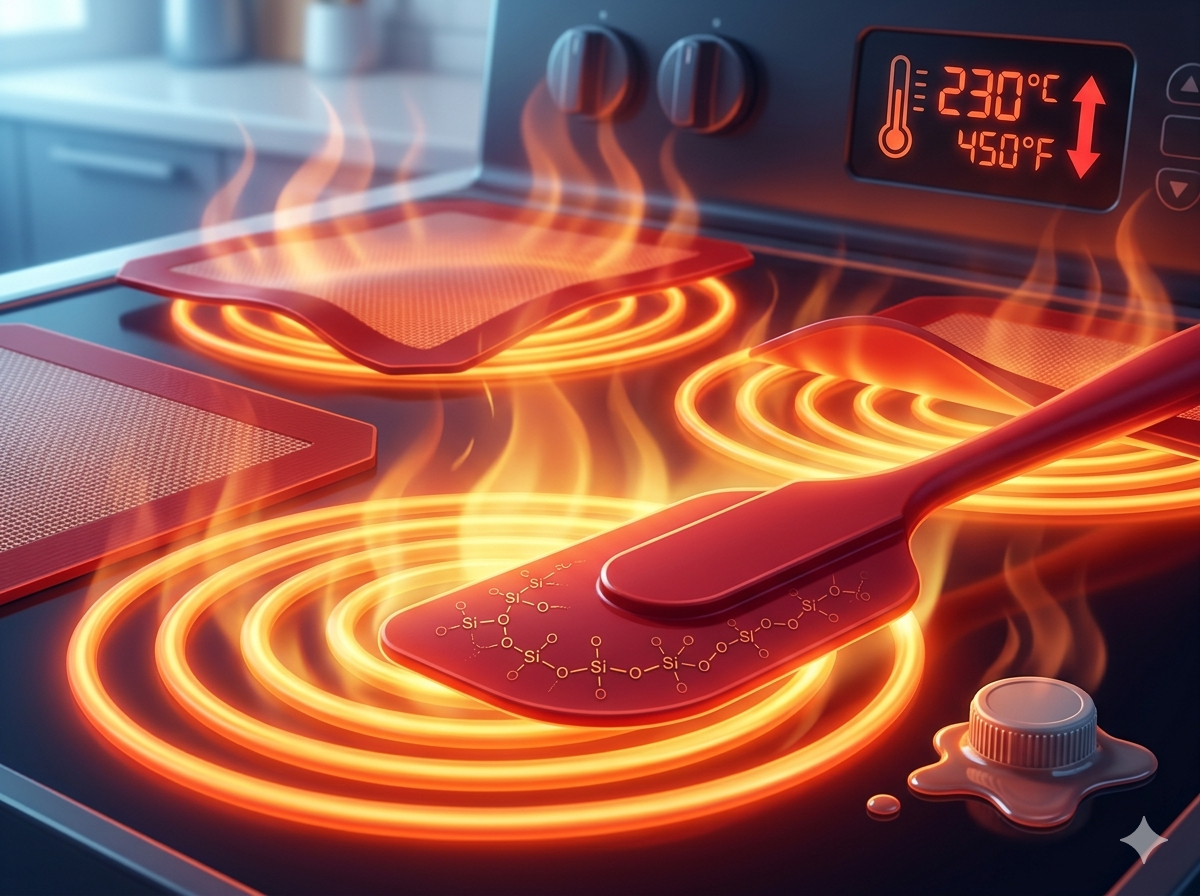
Yes. 100% food-grade silicone is fully oven-safe, typically up to 230°C (446°F). Always check the manufacturer's packaging to confirm the exact temperature rating.
No. Most air fryers operate at a maximum temperature of 200°C to 220°C (400°F to 428°F), which falls well within silicone’s safe operational zone. Using food-grade silicone liners is highly effective for air frying.
Unlike plastic, which releases highly toxic gases when burned, 100% pure silicone decomposes primarily into carbon dioxide, water vapor, and non-toxic silica ash. It is significantly safer for both human health and the environment.
Silicone is highly flame-retardant and difficult to ignite. It will not sustain a flame on its own once the external heat source or fire is removed.


