Yes, food-grade silicone baking pans are safe for cooking and baking. High-quality silicone is an inert, non-toxic polymer that does not react with food, leach harmful chemicals, or release toxic fumes when used within its approved temperature range—typically up to 220°C to 230°C (428°F to 446°F).
To ensure absolute safety, global regulatory bodies like the US Food and Drug Administration (FDA) and Europe’s LFGB (Lebensmittel- und Futtermittelgesetzbuch) strictly regulate silicone marketplace standards, ensuring products are BPA-free, heavy-metal-free, and stable under high heat.
Silicone is not plastic. It is a synthetic rubber made from silicon (a natural element abundant in sand and rock), oxygen, carbon, and hydrogen. Because of its stable chemical backbone, it boasts remarkable thermal resistance and chemical inertness.
No Chemical Leaching: Unlike certain plastics that release endocrine disruptors like BPA or phthalates when heated, food-grade silicone does not alter the flavor, smell, or chemical composition of your food.
Thermal Stability: It maintains its structural integrity across extreme temperatures, safely transitioning from the freezer directly to the oven.
Non-Stick and Non-Reactive: It resists acidic foods (like tomatoes or citrus) and does not corrode or rust over time like traditional metal pans.
When sourcing or purchasing silicone bakeware, understanding the regulatory standard is critical. While both FDA and LFGB compliance guarantee non-toxicity, the testing protocols differ significantly.
| Safety Feature / Standard | FDA Approved (USA) | LFGB Certified (Europe / Germany) |
| Primary Testing Focus | Basic extractive limits and overall chemical stability. | Rigorous "pinch and twist" volatile organic matter testing. |
| Strictness Level | High (Safe for general consumer and B2B use). | Premium (Stricter limits on extractables; highly recommended for premium markets). |
| Odors / Fumes | Minimal; may require an initial wash or "bake-out." | Virtually zero volatile substances or odors during first use. |
| Best Used For | Everyday kitchen utensils, standard bakeware, and baby feeding sets. | Premium bakeware, professional pastry molds, and strict European compliance. |
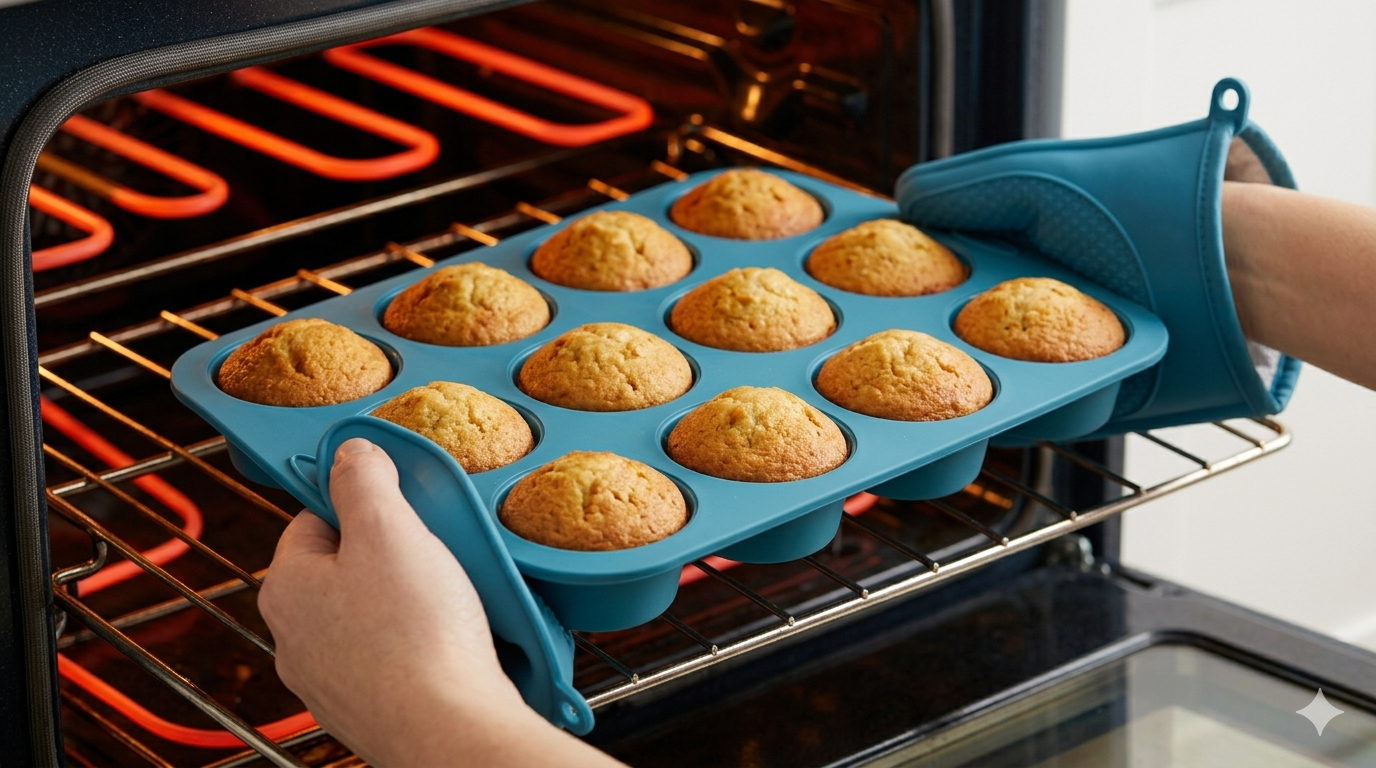
Choosing the right bakeware involves balancing safety, convenience, and performance. Here is how high-grade silicone stack up against traditional materials:
| Bakeware Material | Temperature Limits | Chemical Safety Risks | Durability & Convenience |
| Food-Grade Silicone | Up to 230°C (446°F) | None. Inert, BPA-free, and non-reactive. | Flexible, dishwasher-safe, unbreakable, easy storage. |
| Non-Stick Metal (PTFE/PFOA) | Up to 260°C (500°F) | Risk of toxic fumes if overheated or if the coating scratches. | Rigid, excellent heat conduction, but prone to scratching. |
| Borosilicate Glass | High (Varies) | None. Inert and safe. | Fragile, heavy, prone to thermal shock (cracking with sudden temperature shifts). |
Not all silicone on the market is created equal. Cheap manufacturers often blend pure silicone with plastic chemical fillers to cut costs. These fillers can leach harmful toxins and emit foul odors when heated.
To check if your bakeware is 100% pure silicone, use these verified methods:
The Pinch Test: Twist or pinch a flat surface of the silicone pan. If the bent area turns white, it contains plastic fillers. Pure food-grade silicone does not change color when twisted.
The Odor Check: High-quality silicone does not smell like plastic or chemicals out of the box.
Certification Labels: Look for explicit "100% Food-Grade," "FDA Approved," or "LFGB Certified" stamps on the packaging.
No. Food-grade silicone will not melt or catch fire within its recommended temperature limits (typically up to 230°C/446°F). However, you must keep it away from direct flame sources, broilers, and hotplates.
Yes. Silicone is completely transparent to microwave radiation, making it perfectly safe for microwave cooking. It is also completely dishwasher safe and won't degrade from harsh dishwashing detergents.
While silicone is naturally non-stick, a light coating of cooking oil or spray during the first few uses—or for high-sugar recipes like cakes—can help ensure an effortless release and easier cleanup.
Unlike non-stick metal pans coated with Teflon, silicone is solid all the way through. If it gets minor scratches, it does not expose a toxic inner layer, though deeply cut pans should be replaced for hygienic reasons.


